
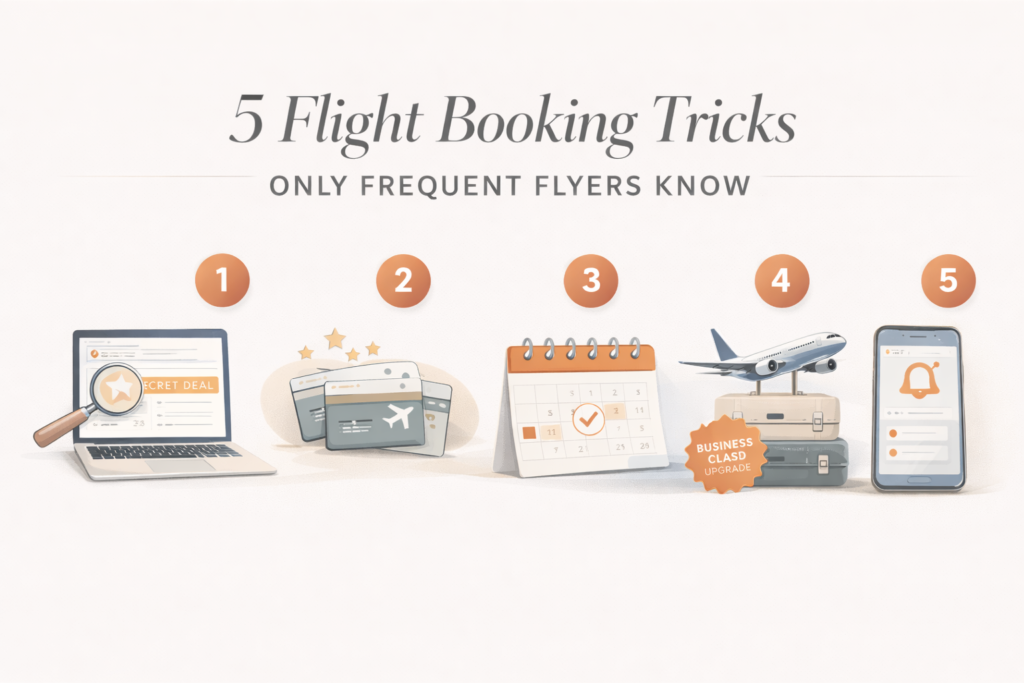
5 Flight Booking Tricks Only Frequent Flyers Know
Booking flights looks simple. You search, compare prices, click buy, and wait for departure day.
But frequent flyers know something most travelers do not.
Airfare pricing is complex. Airlines use advanced algorithms, fare classes, dynamic pricing, and seat inventory management. The average traveler sees only the final number. Experienced travelers understand the system behind it.
If you want to stop overpaying and start flying smarter, these five flight booking tricks can change everything.
Let’s break them down clearly and practically.
Why Flight Prices Change So Much
Before we get into the tricks, it helps to understand why prices move.
Airlines adjust fares based on:
- Demand
- Seat availability
- Route popularity
- Booking timing
- Competitor pricing
- Historical data
- Travel season
A flight can change price multiple times in one day. That is why two people on the same plane often pay very different amounts.
Frequent flyers do not guess. They use strategy.
Trick 1: Book in the “Goldilocks Window”
Many people believe two myths:
Myth one: Book as early as possible.
Myth two: Wait for last minute deals.
Both can cost you money.
Frequent flyers know there is a sweet spot.
Best Time to Book Domestic Flights
For domestic routes, the ideal booking window is usually:
1 to 3 months before departure
Booking too early means airlines have not released competitive pricing yet. Booking too late means seats are limited and prices rise.
Best Time to Book International Flights
For international routes, the sweet spot is often:
2 to 5 months before departure
For peak seasons like summer in Europe or December holidays, booking even earlier is smarter.
Why This Works
Airlines release tickets about 11 months in advance. Early prices are often high because airlines test demand. As competition increases and more inventory opens, prices settle into a more competitive range. Then, as the flight fills up, prices rise again.
Frequent flyers track this cycle.
Trick 2: Search One Way Flights Instead of Round Trip
Most people search round trip automatically. That can limit your savings.
Frequent flyers always compare:
- Round trip pricing
- Two separate one way tickets
- Mixed airline combinations
Sometimes two one way tickets cost less than a single round trip fare.
Why This Happens
Airlines use different pricing strategies for outbound and inbound routes. One direction may be discounted while the other is not.
By separating tickets, you can:
- Choose different airlines
- Use points one direction
- Fly into one airport and out of another
This is especially powerful for international travel.
Trick 3: Use Nearby Airports Strategically
Frequent flyers rarely search just one airport.
They check:
- Secondary airports
- Alternative cities within driving distance
- Nearby international gateways
For example:
Flying out of Newark instead of JFK
Flying from Fort Lauderdale instead of Miami
Flying into Milan instead of Rome
Sometimes the difference is hundreds of dollars.
Why Secondary Airports Are Cheaper
Major hubs often have higher airport taxes and heavier demand. Smaller airports may have:
- Lower fees
- Less congestion
- More competitive pricing
This trick is especially useful in Europe and Asia where cities are well connected by trains and short flights.
Trick 4: Monitor Fare Classes and Seat Inventory
This is where frequent flyers really gain an advantage.
Every flight has multiple fare classes. Even within economy, there are different pricing buckets.
When cheaper fare classes sell out, the price jumps automatically.
What Experienced Travelers Do
They:
- Check seat maps
- Watch how full a flight is
- Monitor fare changes over days or weeks
- Set price alerts
If a flight is mostly empty, prices may stay stable or drop. If it is filling quickly, prices usually rise.
Use Price Alerts
Tools like Google Flights allow you to track specific routes. When fares drop, you get notified.
Frequent flyers do not randomly check prices. They automate the process.
Trick 5: Position Yourself for Cheaper Long Haul Flights
This is one of the most powerful strategies.
Instead of flying long haul from your home city, frequent flyers sometimes book a cheap short flight to a major international hub first. This is called a positioning flight.
Example
A nonstop flight from a small U.S. city to Paris may cost $1,200.
But:
- A $120 flight to New York
- Then a $450 New York to Paris flight
Total cost becomes $570 instead of $1,200.
That is real savings.
Important Warning
If booking separate tickets:
- Allow extra time between flights
- Consider overnight stays
- Understand baggage rules
This strategy requires planning, but the savings can be huge.
Bonus Strategy: Be Flexible With Travel Days
Frequent flyers know that:
- Tuesday and Wednesday departures are often cheaper
- Saturday flights can also be affordable
- Friday and Sunday are typically expensive
Even shifting your departure by one day can change pricing significantly.
If your schedule allows flexibility, use a fare calendar view to compare multiple days at once.
How Frequent Flyers Use Technology
Technology gives experienced travelers an advantage.
They use:
- Google Flights for flexible calendar pricing
- Skyscanner for global comparisons
- Airline apps for flash sales
- Credit card travel portals for point redemptions
They also subscribe to airline newsletters for limited time sales.
The key is combining tools, not relying on just one.
Common Booking Mistakes to Avoid
Even smart travelers make errors. Here are mistakes frequent flyers avoid:
Booking without comparing nearby airports
Ignoring baggage fees
Choosing basic economy without reading restrictions
Waiting too long after a price drop
Not checking refund or change policies
Understanding fare rules is just as important as finding a low price.
Real World Example
Let’s say you want to fly from Chicago to London.
Average traveler:
Searches round trip from Chicago to London
Books first option for $950
Frequent flyer:
Searches one way flights
Checks New York departures
Finds $420 New York to London
Books $90 Chicago to New York
Returns using points
Total cost under $600.
Same destination. Different strategy.
Why These Tricks Work
Airline pricing is built around:
- Demand forecasting
- Revenue optimization
- Inventory segmentation
Frequent flyers simply understand the system better.
They do not rely on luck. They rely on timing, flexibility, and comparison.
Frequently Asked Questions
Do flight prices really change daily?
Yes. Airlines use dynamic pricing that can adjust multiple times per day based on demand and booking patterns.
Is Tuesday really the cheapest day to book?
There is no universal cheapest day to book. What matters more is the booking window and travel date flexibility.
Are nonstop flights always more expensive?
Often yes. Airlines charge a premium for convenience. Flights with one stop are usually cheaper.
Should I always book directly with the airline?
Booking directly can make changes and refunds easier. However, always compare total cost across platforms before purchasing.
Final Thoughts
Frequent flyers are not lucky. They are strategic.
They understand:
- When to book
- How to compare one way versus round trip
- Why nearby airports matter
- How fare classes impact pricing
- When positioning flights make sense
These five flight booking tricks are simple but powerful.
Use them consistently and you will stop overpaying for airfare.
The next time you search for a flight, do not just click and buy. Apply these strategies and watch how much you save.
Smart booking turns expensive travel into affordable adventure.