
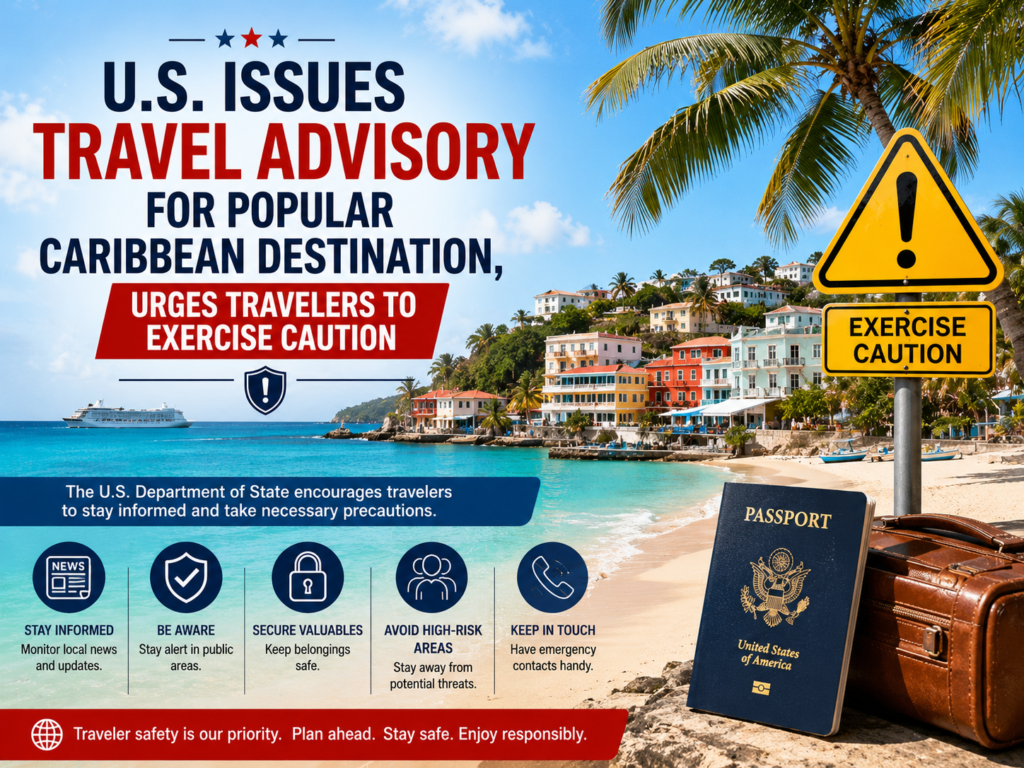
U.S. Issues Travel Advisory for Popular Caribbean Destination, Urges Travelers to Exercise Caution
Travelers planning a Caribbean vacation are being urged to review updated safety guidance after the U.S. Department of State issued a revised advisory for Trinidad and Tobago, citing concerns related to crime and security risks.
The advisory does not prohibit travel to the destination but recommends that Americans reconsider travel plans because of reported risks, including violent crime and a heightened risk of terrorism.
Trinidad and Tobago remains a destination known for its beaches, cultural festivals, nature attractions and Caribbean heritage. However, U.S. officials advise visitors to understand local conditions and take precautions before and during their trips.
What the U.S. Travel Advisory Says
The U.S. Department of State uses a four-level travel advisory system:
- Level 1: Exercise normal precautions.
- Level 2: Exercise increased caution.
- Level 3: Reconsider travel.
- Level 4: Do not travel.
The updated guidance for Trinidad and Tobago places the country at Level 3: Reconsider Travel, with U.S. officials citing crime concerns and a heightened terrorism risk.
A Level 3 advisory does not mean travel is banned. Instead, it indicates that travelers should carefully evaluate risks and consider additional precautions before visiting.
Security Concerns Behind the Advisory
According to U.S. officials, the advisory reflects concerns about criminal activity and security conditions.
Authorities have warned travelers about risks that can include:
- Violent crime.
- Theft and robbery.
- Potential risks associated with criminal activity.
- Security concerns requiring increased awareness.
Officials regularly update travel advisories based on information from embassies, local authorities and security assessments.
Travel advisories are designed to provide information for travelers making decisions rather than serve as a complete assessment of a country’s tourism experience.
Trinidad and Tobago’s Tourism Importance
Trinidad and Tobago is one of the Caribbean’s most culturally significant destinations.
The twin-island nation is known for:
- Carnival celebrations.
- Beaches and coastal areas.
- Rainforests and wildlife.
- Music traditions including calypso and soca.
- Diverse cultural influences.
The country attracts visitors interested in both leisure travel and cultural experiences.
Like many destinations worldwide, however, tourism areas and local communities can experience different levels of risk depending on location, time and circumstances.
What Travelers Should Know Before Visiting
Visitors planning a trip to Trinidad and Tobago should review current government guidance, monitor local news and understand local laws.
Travelers may also consider the following precautions:
Stay aware of surroundings
Visitors should remain alert in crowded areas, tourist locations and unfamiliar neighborhoods.
Use reliable transportation
Travelers are generally advised to use established transportation providers and avoid accepting rides from unknown individuals.
Protect personal belongings
Keeping valuables secure and avoiding displaying expensive items can reduce the risk of theft.
Follow local guidance
Local authorities and hotel staff may provide useful information about areas to avoid or safety considerations.
Keep emergency information available
Travelers should have access to emergency contacts, travel insurance details and copies of important documents.
Travel Advisories Do Not Reflect Every Visitor’s Experience
Government travel warnings provide risk information but do not describe every traveler’s experience.
Millions of people visit Caribbean destinations each year without major problems. However, crime levels, infrastructure, healthcare access and emergency response capabilities can vary between locations.
Travelers should consider their own circumstances, including:
- Health needs.
- Planned activities.
- Travel experience.
- Destination areas.
- Personal comfort with risk.
How Travel Insurance Can Help
Travel insurance is often recommended for international trips, especially when traveling to destinations with changing conditions.
Depending on the policy, coverage may include:
- Emergency medical expenses.
- Trip cancellations.
- Travel interruptions.
- Lost baggage.
- Emergency assistance.
Travelers should carefully review policy terms because coverage differs between providers.
Caribbean Travel Advisories Vary by Destination
The Caribbean is not a single travel environment. Each country and territory has its own security conditions and advisory level.
Some popular Caribbean destinations remain under lower-level advisories, while others face higher warnings because of specific concerns such as crime, political instability or infrastructure challenges.
Travelers should check the latest advisory for their specific destination rather than making assumptions about the entire region.
Balancing Safety and Travel Plans
Travel experts often recommend that visitors take a practical approach when reviewing safety information.
A travel advisory should be one factor in trip planning, alongside:
- Accommodation choices.
- Planned activities.
- Transportation arrangements.
- Local conditions.
- Personal risk tolerance.
For many travelers, preparation and awareness can help reduce avoidable problems.
What the Advisory Means for Future Visitors
The updated guidance means Americans considering travel to Trinidad and Tobago should carefully review security information before booking or departing.
Travelers who decide to visit should remain informed, follow safety recommendations and monitor updates from official sources.
Conditions can change quickly, and government advisories may be revised as new information becomes available.
Final Thoughts
The U.S. travel advisory for Trinidad and Tobago highlights the importance of researching destinations before international trips.
The warning is focused on specific security concerns identified by U.S. officials, including crime and terrorism risks, rather than a blanket statement about tourism across the Caribbean nation.
For travelers, the best approach is informed planning: check official guidance, understand local conditions and make decisions based on current information and personal circumstances.