Is New York City’s Summer Tourism Set for a Historic Peak With the World Cup, America’s 250th Anniversary and Celebrity Events?
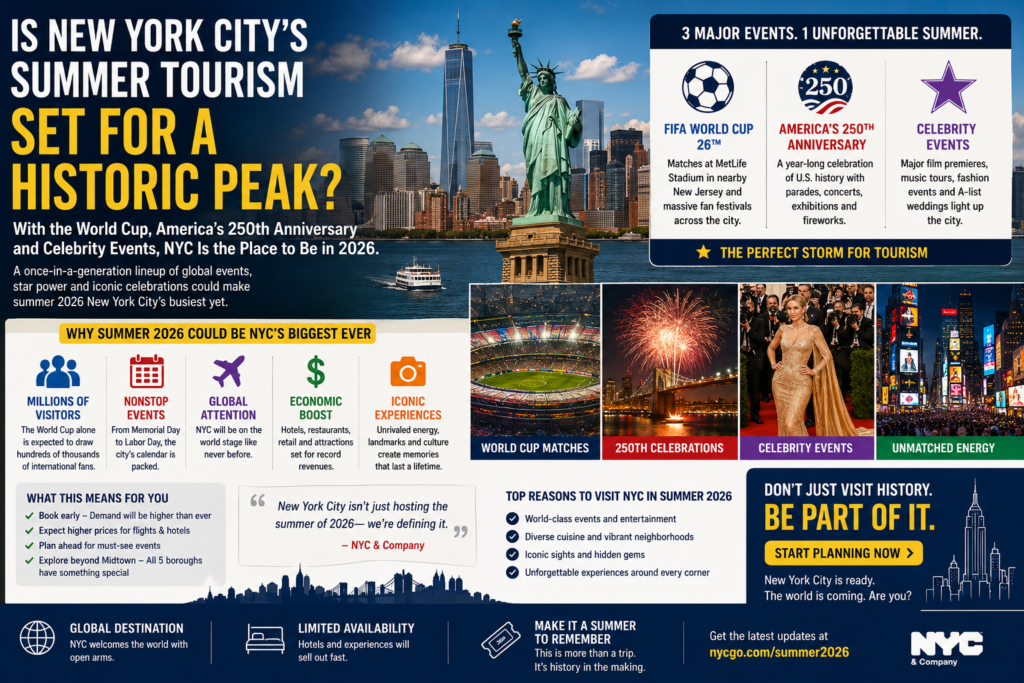
New York City is preparing for one of the busiest tourism periods in recent memory as several major events converge in 2026, including matches from the FIFA World Cup, celebrations marking the 250th anniversary of the United States and a calendar filled with major cultural attractions.
The combination has raised expectations among tourism officials, hotels, airlines and businesses that the city could see increased visitor activity during the summer season.
However, the exact scale of the impact will depend on factors including travel demand, accommodation availability, transportation capacity and visitor spending patterns.
A Summer of Major Global Events
New York City is already one of the world’s most visited urban destinations, attracting travelers for its museums, entertainment, restaurants, landmarks and business activity.
In 2026, the city will gain additional international attention because of several major events.
Key factors expected to influence tourism include:
- FIFA World Cup matches in the New York/New Jersey region.
- Nationwide celebrations connected to the United States’ 250th anniversary.
- Large-scale entertainment and cultural events.
Major global events often create additional demand for hotels, restaurants, transportation services and attractions.
FIFA World Cup 2026 Brings Global Attention
The 2026 FIFA World Cup will be hosted across the United States, Canada and Mexico, making it the first tournament to feature 48 teams.
The New York/New Jersey region will serve as one of the host areas, with matches scheduled at MetLife Stadium in East Rutherford, New Jersey, including the tournament final.
Although the stadium is located outside New York City, the region is expected to benefit from international visitors traveling through nearby airports, staying in area hotels and exploring attractions in Manhattan and surrounding communities.
Large sporting events typically generate tourism activity because fans often extend their trips beyond match days.
Visitors may combine games with:
- Sightseeing.
- Shopping.
- Dining.
- Cultural experiences.
- Regional travel.
Hotels and Hospitality Prepare for Increased Demand
Major events can significantly affect hotel demand, especially in cities with limited room inventory.
New York City has one of the largest hotel markets in the United States, but peak periods can still create challenges involving:
- Higher room rates.
- Limited availability.
- Increased demand for short-term accommodations.
Hotels often prepare months or years in advance for major events by adjusting staffing, marketing strategies and guest services.
However, higher demand does not always mean every business experiences equal benefits. The economic impact can vary depending on location, pricing and visitor behavior.
America’s 250th Anniversary Celebrations
Another major tourism factor in 2026 is the 250th anniversary of the United States Declaration of Independence.
Communities across the country are planning commemorative events, exhibitions and public programs throughout the year.
New York has historical significance in the nation’s founding story, serving as an important Revolutionary War location and an early U.S. capital.
Anniversary-related tourism may encourage visitors to explore:
- Historic landmarks.
- Museums.
- Cultural institutions.
- Government and civic sites.
Events connected to major national anniversaries often attract both domestic and international travelers interested in history and cultural experiences.
Celebrity Events and the Influence of Pop Culture Travel
Celebrity-related events can also influence tourism patterns, particularly when they generate international attention.
Taylor Swift’s global popularity has demonstrated how entertainment can drive travel demand, with fans frequently traveling across cities and countries for concerts, exhibitions and related experiences.
Reports about celebrity weddings and private events often generate public interest, but the direct tourism impact depends on confirmed details, accessibility and whether events are connected to public activities.
The broader trend is clear: entertainment and celebrity culture increasingly influence where people travel and how they plan trips.
New York’s Role as a Global Events City
New York has long benefited from its reputation as a destination for major international events.
The city regularly hosts:
- Fashion events.
- Sporting competitions.
- Broadway productions.
- Concerts.
- Cultural festivals.
- Business conferences.
Its infrastructure, including major airports, public transportation and extensive hospitality options, allows it to accommodate large visitor numbers.
However, managing peak tourism periods remains a challenge.
Transportation Challenges During Busy Travel Periods
Increased visitor numbers can place pressure on transportation systems.
Potential challenges include:
- Airport congestion.
- Increased traffic.
- Higher demand for taxis and rideshare services.
- Crowding at popular attractions.
The New York metropolitan area has three major airports:
- John F. Kennedy International Airport.
- LaGuardia Airport.
- Newark Liberty International Airport.
Travelers visiting during major events are generally encouraged to plan transportation in advance and allow extra time.
Will 2026 Become NYC’s Biggest Tourism Summer?
While expectations are high, tourism records cannot be predicted solely based on event schedules.
Several factors influence visitor numbers, including:
- Airfare prices.
- Currency exchange rates.
- Hotel costs.
- Economic conditions.
- Weather.
- International travel trends.
A major event can increase demand, but the overall tourism outcome depends on how many visitors actually travel and how long they stay.
Economic Impact Beyond Hotels
Tourism spending extends beyond accommodations.
Visitors contribute to many parts of the local economy, including:
- Restaurants.
- Retail stores.
- Museums.
- Attractions.
- Transportation providers.
- Entertainment venues.
International visitors are particularly important because they often spend more time and money during trips compared with shorter domestic visits.
How Travelers Can Prepare for a Busy NYC Summer
Visitors planning a New York trip during major events should consider:
Book early
Popular travel dates may see limited availability.
Compare neighborhoods
Staying outside the busiest areas can sometimes provide more options and easier transportation.
Plan attractions ahead
Major museums, shows and experiences may become more crowded.
Use public transportation
New York’s subway and transit networks can often be more practical than driving during busy periods.
Check event schedules
Travelers should confirm dates and locations before booking flights and accommodations.
The Bigger Picture for New York Tourism
The expected surge in attention during 2026 reflects a broader trend in global tourism: major events can transform cities into temporary international gathering places.
The World Cup and anniversary celebrations provide New York with opportunities to showcase its culture, history and hospitality industry.
At the same time, the city will need to manage the challenges that come with large visitor numbers, including affordability, transportation and crowd management.
Final Thoughts
New York City’s summer 2026 tourism outlook is being shaped by an unusual combination of global sporting events, national celebrations and cultural attention.
The FIFA World Cup, America’s 250th anniversary and ongoing entertainment-driven travel trends could create one of the most active tourism periods the city has seen in years.
Whether it becomes a record-breaking season will depend on actual visitor numbers and economic conditions, but one thing is certain: New York will be among the world’s most closely watched travel destinations in 2026.