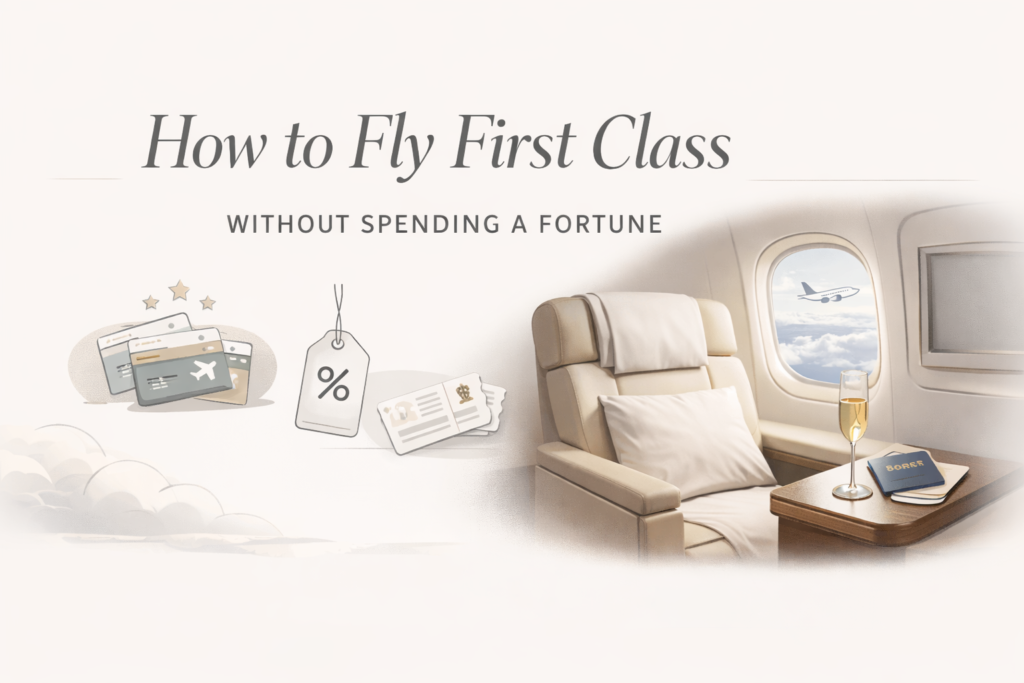
How to Fly First Class Without Spending a Fortune
Flying first class sounds like a dream. Wide seats, gourmet meals, priority boarding, airport lounges, and service that makes you feel special. For many people, it also sounds expensive and out of reach.
The truth is simple. You do not have to be rich to fly first class. You just need the right strategy.
In this complete guide, you will learn practical, proven ways to fly first class without spending a fortune. These tips are based on real travel experience, smart booking strategies, and industry insights. Whether you are flying within the United States, traveling to Europe, visiting Asia, or planning a special honeymoon trip, this guide will help you get premium comfort at a much lower price.
Let’s begin.
Why First Class Is So Expensive
Before we talk about saving money, it helps to understand why first class tickets cost so much.
Airlines price first class higher because:
- Seats take up more space in the aircraft
- Service levels are higher
- Meals and drinks are premium
- Baggage allowances are larger
- Flexibility options are better
Business travelers and wealthy customers often pay full price. Airlines know this. That is why first class tickets can cost two to five times more than economy.
But here is the important part. Airlines also hate flying empty premium seats. That is where opportunity begins.
1. Use Airline Miles and Points the Smart Way
One of the best ways to fly first class for less is by using miles and travel credit card points.
Choose the Right Travel Credit Card
Many travel rewards credit cards offer:
- Large welcome bonuses
- Points for everyday spending
- Transfer options to airline partners
For example, flexible point programs like Chase Ultimate Rewards, American Express Membership Rewards, and Capital One Miles can be transferred to multiple airlines. This gives you more options and better value.
Instead of paying $4,000 for a first class ticket from New York to London, you might redeem 80,000 to 120,000 miles plus taxes. That is a massive difference.
Focus on High Value Redemptions
Using points for economy flights often gives lower value. First class and business class redemptions usually provide the highest value per point.
If you want maximum savings:
- Avoid peak travel dates
- Search partner airlines
- Book early when award seats are released
Consider International First Class
Domestic first class in the US is often just a larger seat. International first class on airlines like Emirates, Singapore Airlines, Lufthansa, or Qatar Airways offers a true luxury experience.
Using miles for these flights can save thousands of dollars.
2. Look for Discounted First Class Fares
Not all first class tickets are overpriced. Sometimes airlines offer discounted premium fares.
Book During Sales
Airlines occasionally run business and first class sales. These are more common for international routes.
Search for:
- New York to Paris first class sale
- Los Angeles to Tokyo business class deal
- Chicago to Dubai premium fare
Use flight deal websites and set alerts on platforms like Google Flights.
Use Google Flights Price Tracking
Google Flights allows you to:
- Track specific routes
- View calendar pricing
- Compare nearby airports
If you are flexible with travel dates, you can save hundreds or even thousands of dollars.
Try Smaller Airports
Flying from alternative airports can reduce premium fares. For example:
- Newark instead of JFK
- Oakland instead of San Francisco
- Fort Lauderdale instead of Miami
Even driving two hours to another airport can mean major savings.
3. Upgrade Instead of Buying First Class
Instead of purchasing a first class ticket directly, buy economy or premium economy and upgrade.
This method often costs much less.
Use Miles to Upgrade
Many airlines allow mileage upgrades from economy to business or first class.
The key is booking the right fare class. Basic economy usually does not qualify for upgrades.
Before buying a ticket:
- Check upgrade eligibility
- Compare upgrade miles required
- Confirm seat availability
Bid for an Upgrade
Some airlines offer upgrade bidding programs.
You receive an email before departure asking if you want to bid for a first class upgrade. You submit an offer, and if accepted, you move to first class.
Sometimes a $300 bid can secure a seat that originally cost $2,000 more.
Ask at Check In
This is an underrated strategy.
At the airport, politely ask about paid upgrade availability. Airlines sometimes offer last minute upgrades at a discount to fill empty seats.
Be friendly and respectful. Kindness goes a long way.
4. Earn Elite Status
Frequent flyer status can significantly increase your chances of flying first class.
How Elite Status Helps
Elite members receive:
- Complimentary upgrades
- Priority on upgrade lists
- Bonus miles
- Lounge access
In the US, airlines like Delta, American Airlines, and United frequently upgrade elite members on domestic routes.
Credit All Flights to One Airline
Instead of spreading flights across multiple airlines, concentrate your travel with one airline alliance.
For example:
- Star Alliance
- Oneworld
- SkyTeam
Even mid tier status can provide meaningful upgrade opportunities.
5. Use Companion Certificates and Travel Perks
Some premium credit cards offer companion tickets or upgrade certificates.
These benefits can:
- Allow a second traveler to fly nearly free
- Confirm upgrades in advance
- Offer annual travel credits
If you travel at least once or twice a year, these benefits can easily justify the card fee and help you access first class.
6. Fly on Less Popular Days
Timing matters more than most people think.
Best Days to Fly First Class for Less
Cheaper premium fares are often found on:
- Tuesdays
- Wednesdays
- Saturdays
Business travelers typically fly Monday mornings and Thursday evenings. Avoiding those peak times increases your chances of lower fares and upgrades.
Avoid Major Holidays
Flying first class during:
- Christmas
- Thanksgiving
- Summer peak season
Usually means paying top dollar.
If possible, travel in shoulder season. For Europe, that means spring and fall. For Caribbean destinations, late August and early December often have lower demand.
7. Consider Positioning Flights
Sometimes flying from another city dramatically lowers first class prices.
For example:
A first class ticket from New York to Rome might cost $5,000. The same ticket from Toronto to Rome could cost $2,800.
You can book a separate economy ticket to Toronto and then start your long haul premium journey there.
This strategy works especially well for:
- Europe departures from Canada
- Asia departures from Southeast Asia hubs
- Middle East departures from regional airports
Always allow extra time between separate tickets to avoid missed connections.
8. Use Airline Alliances to Your Advantage
Airline alliances allow you to book flights on partner airlines using miles.
Sometimes partner airlines charge fewer miles for the same seat.
For example:
- Booking Lufthansa through Air Canada Aeroplan
- Booking Qatar Airways through American Airlines AAdvantage
- Booking ANA through Virgin Atlantic
These sweet spots can reduce mileage costs by tens of thousands of points.
Research alliance award charts carefully.
9. Look for Mistake Fares
Mistake fares happen when airlines accidentally publish incorrect prices.
These deals can include:
- First class tickets priced like economy
- Business class tickets at deep discounts
They do not happen every day, but when they do, you must act fast.
Sign up for airfare deal alerts. If you find a mistake fare, book immediately and wait before making additional plans.
10. Travel During Off Peak Seasons
If your goal is affordable first class travel, flexibility is your greatest advantage.
Europe
Best months for lower premium fares:
- February
- March
- November
Asia
Lower demand periods:
- Late January
- September
Caribbean
Affordable windows:
- Late August
- Early December
Traveling during these periods increases award seat availability and lowers cash prices.
11. Consider Business Class Instead of First Class
In many cases, international business class offers nearly the same experience as first class.
Modern business class often includes:
- Lie flat seats
- Direct aisle access
- Lounge access
- High quality meals
The price difference between business and first class can be thousands of dollars.
If your goal is comfort rather than status, business class can deliver luxury at a fraction of the cost.
12. Monitor Seat Maps Before Departure
Airlines prefer not to leave premium seats empty.
In the days leading up to departure:
- Check the seat map
- Monitor available first class seats
- Watch for upgrade offers
If many seats remain unsold, upgrade prices often drop.
13. Book One Way Tickets Strategically
Sometimes round trip tickets are more expensive than two one way tickets booked separately.
You can:
- Use miles one direction
- Pay cash for a discounted fare the other direction
- Combine different airlines
This hybrid approach reduces total travel cost while still allowing a first class experience.
14. Leverage Corporate and Travel Agent Deals
If you work for a company that travels often, corporate contracts may include discounted premium fares.
Certain travel agencies also specialize in discounted business and first class tickets. They access consolidator fares not always visible online.
Always compare prices to ensure the deal is genuine.
15. Be Flexible With Routes and Connections
Nonstop first class flights are usually the most expensive.
Choosing:
- One stop flights
- Alternative hubs
- Different airlines
Can significantly reduce costs.
For example:
Los Angeles to Bangkok nonstop in business class may cost $4,000.
Los Angeles to Tokyo to Bangkok might cost $2,600.
Flexibility saves money.
Real Example: Flying First Class for Less
Let’s say you want to fly from Chicago to Paris in first class.
Instead of paying $6,000:
- You open a travel rewards card and earn 90,000 points
- You transfer those points to an airline partner
- You book a one way first class award for 85,000 miles plus taxes
- You buy a discounted premium economy ticket for the return
Total cost might be under $1,200 plus annual card fee.
That is thousands saved.
How to Maximize Airport Lounge Access
First class usually includes lounge access, but you can also access lounges through:
- Premium credit cards
- Elite status
- Lounge memberships
This enhances your overall experience even if you do not fly first class every time.
Mistakes to Avoid
Avoid these common errors:
- Booking basic economy when planning to upgrade
- Ignoring airline partner award charts
- Waiting too long to book award seats
- Not comparing multiple airports
- Assuming first class is always overpriced
Knowledge is power when booking flights.
Frequently Asked Questions
Is it cheaper to upgrade at the airport?
Sometimes yes. Airlines may offer discounted upgrades close to departure if seats remain unsold. It is not guaranteed, but it can be cheaper than booking first class in advance.
How many miles do you need for first class?
It depends on the route and airline. Domestic US first class may require 20,000 to 40,000 miles. International first class can range from 60,000 to 150,000 miles one way.
Are first class mistake fares real?
Yes, but they are rare. When they appear, they usually disappear quickly.
Is business class almost the same as first class?
On many airlines, yes. Business class often includes lie flat seats and premium service. The difference may be privacy, dining, and exclusivity.
What is the cheapest way to experience first class once?
Using a credit card welcome bonus for a long haul international flight is often the most affordable strategy.
Final Thoughts: Luxury Travel Is Possible on a Budget
Flying first class without spending a fortune is absolutely possible.
You do not need to be wealthy. You need to be strategic.
Focus on:
- Travel rewards points
- Flexible travel dates
- Upgrade opportunities
- Airline alliances
- Off peak seasons
With planning and patience, you can enjoy luxury travel experiences that once seemed out of reach.
Comfort, privacy, better sleep, and premium service can become part of your journey without destroying your budget.
Smart travelers do not always pay full price. They understand the system and use it wisely.
Now you do too.
Author Experience and Travel Credibility
This guide is based on real world travel strategies used by frequent flyers, travel rewards enthusiasts, and premium cabin travelers. The information reflects current airline practices, loyalty program structures, and booking strategies commonly used across North America, Europe, Asia, and the Middle East.
For the most accurate results, always verify fare rules and award availability directly with airlines before booking.