
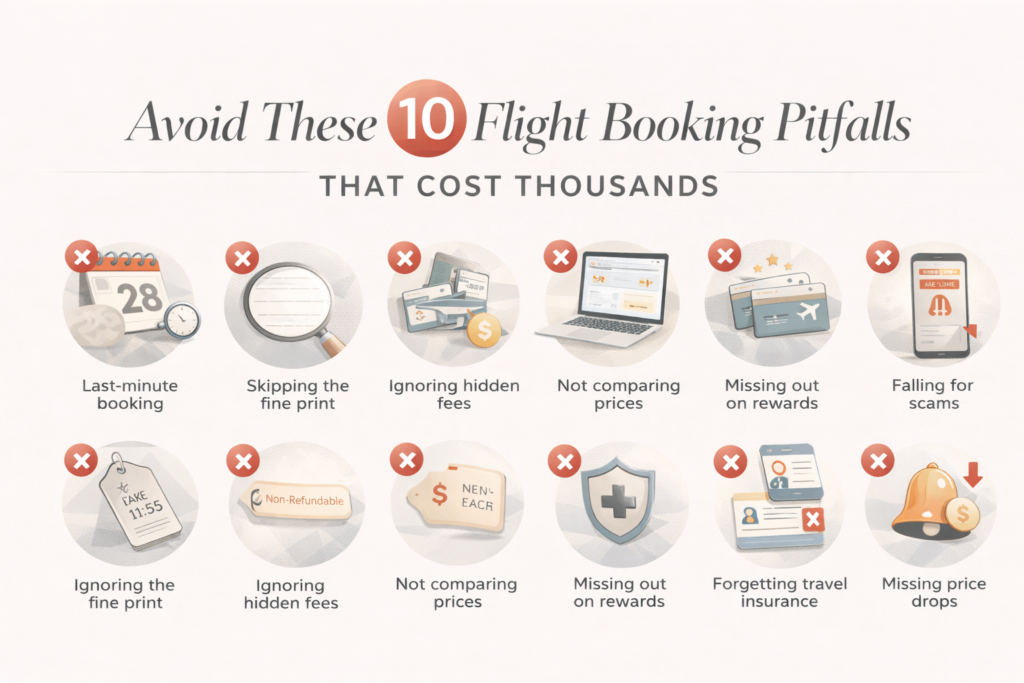
Avoid These 10 Flight Booking Pitfalls That Cost Thousands
Booking a flight seems easy. You search, compare prices, click purchase, and you are done.
But what many travelers do not realize is this: small booking mistakes can cost hundreds or even thousands of dollars over time.
Airlines use complex pricing systems. One wrong click, one wrong timing decision, or one overlooked rule can dramatically increase your travel cost.
Frequent flyers avoid these mistakes. Casual travelers often repeat them.
If you want to save serious money on airfare, avoid these ten costly flight booking pitfalls.
Why Flight Booking Mistakes Are So Expensive
Airlines operate on dynamic pricing models. Fares are based on:
- Demand patterns
- Booking timing
- Route competition
- Fare class availability
- Seat inventory
When you make a mistake, you are often pushed into higher fare categories without even realizing it.
Let’s look at the most expensive errors and how to avoid them.
Pitfall 1: Booking Too Early or Too Late
Many people assume booking as early as possible guarantees the lowest price. Others gamble on last minute deals.
Both approaches can fail.
Why This Costs Money
Airlines release tickets up to 11 months in advance. Early fares are often priced high to test demand. As the departure date approaches, cheaper fare classes may appear briefly before prices rise again.
Booking too late is even worse. As seats fill, airlines increase prices automatically.
What To Do Instead
For most routes:
- Domestic flights: book 1 to 3 months in advance
- International flights: book 2 to 5 months ahead
Peak seasons require earlier planning.
Pitfall 2: Ignoring Nearby Airports
Limiting your search to one airport can dramatically increase your costs.
For example:
Flying from a major hub instead of a secondary airport
Arriving at the most popular airport instead of a nearby alternative
The price difference can be hundreds of dollars per ticket.
Smart Strategy
Always search:
- Nearby departure airports
- Nearby arrival airports
- Cities within driving or train distance
This small step can significantly reduce airfare.
Pitfall 3: Automatically Booking Round Trip
Many travelers book round trip tickets without comparing other options.
Sometimes:
Two one way tickets are cheaper
Mixing airlines reduces total cost
Flying into one city and out of another lowers fares
Why Airlines Price This Way
Airlines use route-based pricing models. One direction may be discounted while the return is not.
Always compare round trip with separate one way tickets before booking.
Pitfall 4: Not Understanding Fare Types
Basic economy may look cheap, but it often includes:
- No seat selection
- No carry on baggage
- No changes allowed
- No refunds
If you need flexibility or luggage, you may end up paying more later.
The Real Cost
Adding baggage fees, seat upgrades, and change penalties can easily exceed the price of a standard economy ticket.
Always read fare rules carefully before buying.
Pitfall 5: Skipping Price Alerts
Many travelers check flight prices once and book immediately.
Flight prices fluctuate daily. Sometimes even hourly.
Without price alerts, you may:
- Miss sudden fare drops
- Book before a sale
- Pay peak pricing
Smart Move
Use tools that track flights and notify you of price changes. Monitoring fares for a few weeks can save hundreds.
Pitfall 6: Booking During Peak Travel Days
Flying during high demand periods raises costs significantly.
Expensive days typically include:
- Friday departures
- Sunday returns
- Major holidays
- School vacation periods
Better Alternative
Flying midweek often reduces fares. Tuesday and Wednesday departures are frequently cheaper.
If your schedule allows flexibility, adjust your travel dates.
Pitfall 7: Ignoring Airline Change Policies
Many travelers focus only on price and ignore flexibility.
If your plans change and your ticket is non refundable, you could lose the entire fare.
Why This Matters
Unexpected situations happen:
- Work changes
- Family emergencies
- Visa delays
- Weather disruptions
Choosing a slightly more flexible fare can protect you from losing thousands.
Pitfall 8: Not Checking Total Trip Cost
The lowest ticket price is not always the cheapest overall option.
Consider:
- Baggage fees
- Seat selection fees
- Airport transfer costs
- Layover hotel stays
- Visa requirements
A cheaper ticket with two long layovers might cost more in the end.
Always calculate total travel expenses, not just airfare.
Pitfall 9: Forgetting About Points and Miles
Many travelers pay cash when they could partially or fully use travel rewards.
Unused credit card points and airline miles are wasted opportunities.
Why This Costs Thousands
Premium cabin tickets can cost several thousand dollars. Using miles strategically can reduce that dramatically.
Even if you do not have enough miles for a full ticket, you may be able to:
- Upgrade
- Offset part of the cost
- Use travel statement credits
Always check reward options before paying full price.
Pitfall 10: Panic Booking After Seeing a Price Jump
One of the most common emotional mistakes is panic booking.
You see a price increase and assume it will only rise further.
In reality, fares often fluctuate. Prices may drop again depending on demand and competition.
What Experienced Travelers Do
They:
- Monitor trends
- Use price history tools
- Track fare classes
- Stay patient within the booking window
Booking based on fear often leads to overpaying.
Real Example of Costly Booking Mistakes
Imagine a family of four flying internationally.
Mistakes made:
- Booked peak summer dates
- Chose nonstop only
- Ignored nearby airport
- Selected basic economy and added baggage later
- Did not use credit card points
Result: Paid $6,800 total.
With better strategy:
- Flexible travel dates
- One stop option
- Alternative airport
- Used miles for one ticket
Total could have been closer to $4,200.
That is a $2,600 difference for one trip.
Now multiply that over years of travel.
How to Protect Yourself From Overpaying
Follow these principles:
- Compare airports
- Compare one way versus round trip
- Track fares before booking
- Understand fare restrictions
- Travel during shoulder seasons
- Consider total trip cost
Airfare is rarely random. There is logic behind pricing.
The more you understand that logic, the less you overpay.
Frequently Asked Questions
Do flight prices really drop after increasing?
Sometimes yes. Airline pricing fluctuates based on demand and competition. Monitoring prices within the ideal booking window is important.
Is basic economy always a bad choice?
Not always. If you travel light and your plans are fixed, it can be a good option. But always read restrictions carefully.
Are nonstop flights worth the extra money?
It depends on your priorities. Nonstop flights save time, but often cost significantly more.
How can I avoid losing money on non refundable tickets?
Consider flexible fares, travel insurance, or airlines with free change policies.
Final Thoughts
Flight booking mistakes are more common than people think.
They happen because travelers rush, assume, or focus only on price.
Avoiding these ten pitfalls can save you thousands over your lifetime.
Airfare pricing rewards patience, flexibility, and knowledge.
The next time you book a flight, slow down. Compare options. Check rules. Think beyond the base fare.
Smart travelers do not just search for flights. They search for value.