Delta’s Basic Business Class: More Choice for Travelers or a New Layer of Premium Fees?
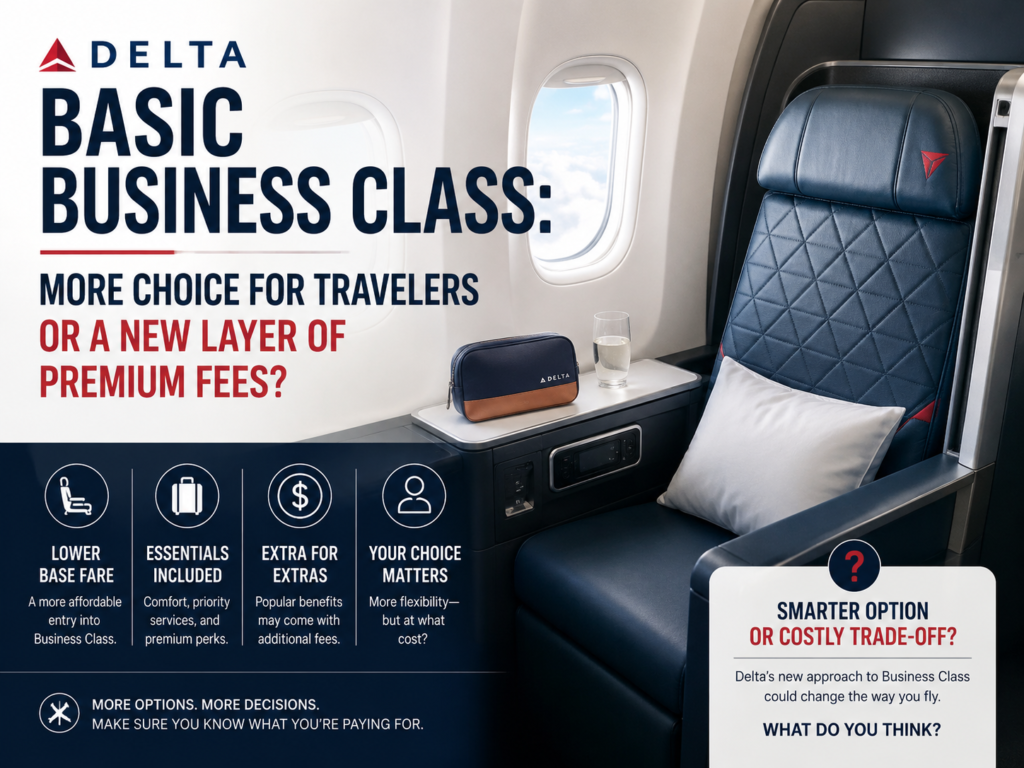
Delta Air Lines has introduced a new lower-tier fare option for its premium cabins, including its international business class product, Delta One. The new fare, called Basic Business, gives passengers access to the same onboard business-class experience while removing several benefits traditionally associated with premium travel.
Delta says the move gives customers more flexibility by allowing travelers to choose which features matter most to them. However, critics argue that the new structure reflects a broader airline industry trend of separating services that were previously included in a single premium fare — meaning passengers may need to pay more to receive the full business-class experience they were accustomed to.
The change has renewed debate about whether airlines are expanding customer choice or creating additional fees for benefits that were once standard.
What Is Delta Basic Business?
Delta’s Basic Business fare is an entry-level option within the airline’s Delta One international business-class cabin.
According to Delta, passengers purchasing Basic Business still receive the core onboard Delta One experience, including features such as lie-flat seats, premium meals and business-class service elements.
The difference is that several ground and flexibility benefits are reduced or removed.
Basic Business passengers may not receive:
- Advance seat selection.
- Delta One lounge access through the fare.
- Delta One check-in benefits.
- The same baggage allowance as higher Delta One fares.
- Complimentary upgrades.
- Certain same-day travel change options.
- The same mileage earning levels.
Delta says the fare is designed for travelers who prioritize the seat and onboard experience but do not need additional premium services before departure.
Delta’s Argument: More Ways to Buy Premium Travel
Delta has positioned the new fare structure as an expansion of customer choice.
The airline says travelers have different priorities. Some passengers may value a lie-flat business-class seat on a long-haul flight but may not consider airport lounge access, flexible ticket changes or premium check-in essential.
Under this model, customers can choose between different levels of service rather than paying for benefits they may not use.
Delta has also expanded Basic options beyond Delta One, introducing similar fare structures for Delta First and Delta Premium Select products.
The airline says the onboard experience remains unchanged between Basic, Classic and Extra versions of these premium products.
Why Some Travelers See It as a Fare Increase
Despite Delta’s explanation, critics argue that the change could effectively increase the cost of a traditional premium experience.
The concern is that passengers who previously expected business-class fares to include benefits such as lounge access, seat selection and greater flexibility may now need to purchase higher fare categories to receive those features.
The Wall Street Journal and other travel industry commentators have described the strategy as part of a broader airline trend toward “unbundling” — separating different parts of a travel experience and charging separately for them.
Under this approach, the headline fare may appear lower, but travelers seeking the complete package may end up paying more.
The Rise of Airline Fare Segmentation
Delta’s move follows a trend already common in economy cabins.
Many airlines have introduced basic economy fares that offer lower prices in exchange for restrictions involving:
- Seat selection.
- Ticket changes.
- Boarding priority.
- Baggage.
- Loyalty benefits.
The strategy has allowed airlines to attract price-sensitive customers while encouraging other passengers to pay for additional flexibility.
Premium cabins have traditionally been less segmented because business-class travelers often expect a more complete service package. Delta’s decision reflects the expansion of this pricing model into higher-fare products.
How Delta’s New Structure Affects Different Travelers
The impact depends largely on how passengers use business-class services.
Travelers focused mainly on the seat
Passengers taking long overnight flights who primarily want a lie-flat seat may find Basic Business attractive if the fare difference is meaningful.
For these travelers, lounge access or premium check-in may not be essential.
Frequent business travelers
Corporate travelers may prefer higher fare categories because flexibility, schedule changes and airport services can be important when plans change.
A restricted ticket may create challenges if meetings move or travel schedules need adjustment.
Luxury travelers
Passengers choosing business class as a complete premium experience may consider lounge access, priority services and flexibility part of the value.
For these travelers, the higher fare categories may remain preferable.
What Happens to Seat Assignments?
One of the key differences with Basic Business involves seat selection.
Delta states that Basic passengers receive seat assignments after check-in unless they purchase an available seat assignment within their product category.
This means travelers who want to select a specific seat in advance may need to consider a different fare option.
For business-class passengers traveling together, this could be an important factor when choosing tickets.
The Debate Over “Premium” Travel
The introduction of Basic Business highlights a larger question facing airlines: What exactly should a premium ticket include?
Historically, business class represented a bundled experience:
- Premium seating.
- Dedicated airport services.
- Lounge access.
- Flexible policies.
- Enhanced loyalty benefits.
Airlines are increasingly separating these elements, allowing customers to pay only for selected features.
Supporters argue this creates transparency and flexibility. Critics say it reduces the value of premium fares by turning previously expected benefits into paid extras.
Similar Strategies Across the Airline Industry
Delta is not alone in experimenting with lower-tier premium fares.
Airlines around the world have increasingly created multiple pricing levels within the same cabin class, offering different combinations of flexibility, services and benefits.
The approach reflects changes in airline economics, where carriers attempt to maximize revenue from different types of travelers.
Leisure travelers, corporate passengers and loyalty program members often value different parts of the journey, creating opportunities for airlines to customize pricing.
What Travelers Should Consider Before Booking
Passengers comparing Delta premium fares should look beyond the seat itself.
Important questions include:
Do you need seat selection?
Travelers flying together or those with specific preferences may want advance assignment.
Is flexibility important?
Business travelers or anyone with uncertain plans should review change and cancellation rules.
Will you use airport lounges?
If lounge access is valuable, calculate whether the higher fare provides better overall value.
How much do loyalty benefits matter?
Mileage earning differences may affect frequent flyers.
Is the price difference significant?
A lower fare may be worthwhile if the removed benefits have little value to the individual traveler.
The Future of Premium Air Travel
Delta’s Basic Business fare reflects a broader transformation in airline pricing.
As carriers look for ways to offer more choices and increase revenue, passengers are likely to see more customized fare structures across different cabin classes.
The challenge for airlines will be balancing flexibility and transparency with customer expectations.
Travelers may welcome lower entry prices, but they will also expect clear information about what is included and what requires an additional payment.
Final Thoughts
Delta’s Basic Business fare represents a significant shift in how airlines approach premium travel.
The airline says the new option gives customers more control by allowing them to pay for the features they value most. Critics argue that it may make the traditional premium experience more expensive by moving familiar benefits into higher fare categories.
For travelers, the key is understanding exactly what each fare includes. A lower business-class price may be appealing, but passengers should consider whether losing flexibility, lounge access or other benefits changes the overall value of the ticket.
As airlines continue refining their pricing models, the definition of a “premium” travel experience is likely to keep evolving.