
Detroit Metro Airport Faces Major Disruptions as Dozens of Flights Delayed and Cancelled
Detroit Metropolitan Wayne County Airport is grappling with widespread travel disruptions today, leaving thousands of passengers stranded, delayed, or scrambling to adjust their plans. One of the busiest aviation hubs in the United States, the airport has been hit by a wave of operational challenges affecting multiple major airlines and both domestic and international routes.
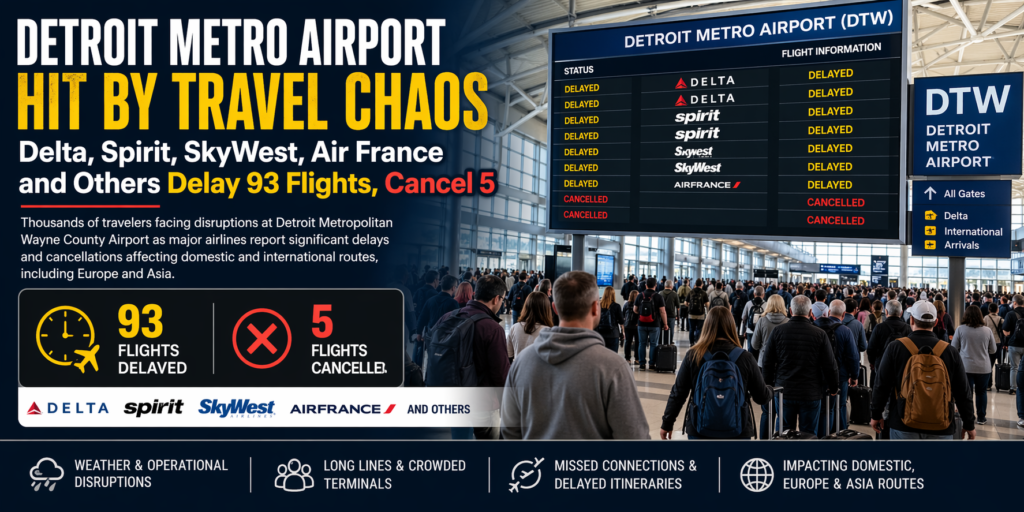
With 93 flights delayed and at least five cancellations confirmed, the situation has quickly escalated into a significant travel headache for passengers and airlines alike. The disruption highlights how vulnerable major hub airports can be when multiple stress factors collide at once.
A Breakdown of the Situation
The current disruption at Detroit Metro Airport is impacting several major carriers, including Delta Air Lines, Spirit Airlines, SkyWest Airlines, and Air France. Together, these airlines operate a substantial share of flights through Detroit, connecting passengers across the United States and to key international destinations in Europe and Asia.
As of the latest updates:
- 93 flights have been delayed, with wait times ranging from short hold-ups to several hours
- 5 flights have been cancelled, forcing passengers to seek alternative arrangements
- Domestic and international routes are both affected, increasing the complexity of the disruption
For an airport that serves as a major transit point for connecting passengers, even a relatively small number of cancellations can have an outsized impact. The ripple effect from delays alone can spread quickly across flight schedules, creating a cascading disruption that extends far beyond Detroit.
Why Detroit Is So Critical to Air Travel
Detroit Metropolitan Wayne County Airport plays a pivotal role in the U.S. aviation network. It is one of the primary hubs for Delta Air Lines, which operates a large number of daily departures and arrivals from the airport.
This hub status means Detroit functions as a key transfer point where passengers connect between flights. Travelers flying from smaller U.S. cities often pass through Detroit en route to larger destinations, while international passengers rely on it as a gateway to and from North America.
Because of this, disruptions in Detroit do not stay local. Instead, they spread across the network:
- A delayed inbound aircraft can affect multiple outbound flights
- Missed connections force rebooking across different routes
- Crew scheduling complications can delay additional flights
- Aircraft rotation schedules can be thrown off for the entire day
In short, when Detroit experiences operational strain, the effects are felt nationwide—and sometimes globally.
What’s Causing the Disruptions?
At this stage, no single official cause has been confirmed for today’s disruption. However, aviation experts point out that events like this are rarely triggered by just one issue. Instead, they typically result from a combination of overlapping challenges.
1. Weather and Airspace Constraints
Weather remains one of the most common causes of airline disruption. Even if conditions at Detroit itself are manageable, storms or adverse weather in other cities can trigger delays that ripple into the airport.
Airspace congestion can also play a role. When traffic levels exceed safe operating capacity, air traffic control may impose restrictions, slowing departures and arrivals.
2. Operational Pressure at a Major Hub
Hub airports operate under tight schedules, with aircraft arriving and departing in carefully timed waves. Any disruption to this flow—whether from late arrivals, gate shortages, or logistical bottlenecks—can quickly escalate.
Detroit’s heavy reliance on connecting traffic makes it particularly sensitive to these kinds of disruptions.
3. Knock-On Effects from Other Cities
Air travel operates as a tightly interconnected system. A delay in one city can cascade across multiple routes as aircraft and crews move through the network.
For example:
- A delayed flight departing from another state may arrive late in Detroit
- That aircraft is then scheduled for another flight, causing further delay
- Crew members assigned to subsequent flights may exceed allowable duty hours
These chain reactions can build rapidly, especially during peak travel periods.
4. Staffing and Technical Issues
Airlines and airports continue to face staffing challenges in certain areas, including ground handling, maintenance, and crew availability.
Additionally, technical issues—whether related to aircraft, systems, or airport infrastructure—can slow operations and add to existing delays.
The Passenger Experience: Delays, Stress, and Uncertainty
For travelers, the impact of such disruptions is immediate and often frustrating. Airports quickly become congested as delayed passengers accumulate, leading to crowded terminals and long lines.
Common Challenges Faced by Travelers
Passengers moving through Detroit today may encounter:
- Extended wait times at gates and check-in counters
- Overcrowded terminals and limited seating
- Missed connecting flights, particularly for international journeys
- Difficulty rebooking flights, as available seats fill up quickly
- Long hold times when contacting airline customer service
For international travelers, the stakes are even higher. Missing a long-haul connection can result in delays of an entire day—or longer—depending on availability.
Emotional and Financial Impact
Beyond logistical inconvenience, disruptions can also carry emotional and financial costs. Travelers may miss important events such as business meetings, family gatherings, or vacations.
Additional expenses can include:
- Hotel stays due to overnight delays
- Meals and transportation costs
- Change fees or fare differences (in some cases)
Although airlines often provide assistance, the sheer volume of affected passengers can slow down response times.
A Pattern of Recent Disruptions
Today’s situation is not an isolated incident. Detroit Metro Airport—and the broader U.S. aviation system—has experienced several waves of disruption in recent months.
Seasonal Travel Pressures
Spring travel typically brings increased passenger volumes due to holidays, school breaks, and improving weather. Higher demand places additional strain on airline operations.
Regional Airline Challenges
Regional carriers such as SkyWest Airlines play a crucial role in feeding passengers into major hubs like Detroit. When these airlines face operational issues, the effects can be amplified across the network.
Weather-Related Systemwide Disruptions
Weather events affecting multiple cities simultaneously can overwhelm the system. Even if Detroit’s conditions are stable, disruptions elsewhere can create a backlog of delayed flights arriving at the airport.
How Disruptions Spread Across the Network
One of the most important aspects of modern air travel is how interconnected everything is. A disruption at one airport rarely stays contained.
Here’s how the ripple effect typically unfolds:
- Initial Delay: A flight is delayed due to weather or another issue
- Aircraft Rotation Impact: The same aircraft is scheduled for another flight, which is also delayed
- Crew Constraints: Pilots and crew may exceed allowable working hours, causing further delays or cancellations
- Passenger Rebooking: Missed connections create demand for alternative flights
- Network Congestion: Other flights become overbooked or delayed as the system adjusts
This chain reaction explains why even a relatively small number of cancellations can lead to widespread disruption.
What Travelers Should Do Right Now
For passengers traveling through Detroit Metro Airport today, preparation and flexibility are key.
Stay Informed
Check your flight status frequently using:
- Airline mobile apps
- Official airline websites
- Airport information screens
Flight statuses can change rapidly during disruption events, so real-time updates are essential.
Allow Extra Time
If you are connecting through Detroit, plan for longer layovers. Ideally, allow at least 3 to 6 hours between flights during periods of disruption.
Consider Alternative Options
If your flight is cancelled or heavily delayed:
- Look for alternate routes through other hub airports
- Consider nearby departure or arrival airports
- Be flexible with travel times if possible
Contact Airlines Early
Rebooking options are often limited and fill quickly. Contact your airline as soon as you are aware of a disruption to secure the best available alternative.
The Airline Response
Airlines typically activate disruption management protocols during events like this. These may include:
- Rebooking passengers onto the next available flights
- Waiving certain change fees
- Providing meal vouchers or hotel accommodations (depending on the situation)
- Deploying additional staff to assist affected travelers
However, response times can vary depending on the scale of the disruption and available resources.
Looking Ahead
While disruptions of this scale are challenging, they are not uncommon in modern aviation—especially at major hub airports. The complexity of airline networks, combined with external factors like weather and operational constraints, means that occasional breakdowns are almost inevitable.
The key question is how quickly the system can recover.
In many cases:
- Delays begin to ease once the initial backlog is cleared
- Airlines reposition aircraft and crews to stabilize schedules
- Operations return to normal within 24 to 48 hours
However, prolonged or compounding issues can extend recovery times.
Final Thoughts
Today’s disruption at Detroit Metropolitan Wayne County Airport serves as a reminder of how interconnected and delicate the global air travel system can be. With dozens of flights delayed and multiple cancellations already reported, the impact is being felt not just in Detroit, but across a wide network of domestic and international routes.
For travelers, the situation underscores the importance of staying informed, planning ahead, and remaining flexible when flying through major hubs.
As airlines work to restore normal operations, passengers are advised to monitor updates closely and prepare for potential changes to their travel plans.