
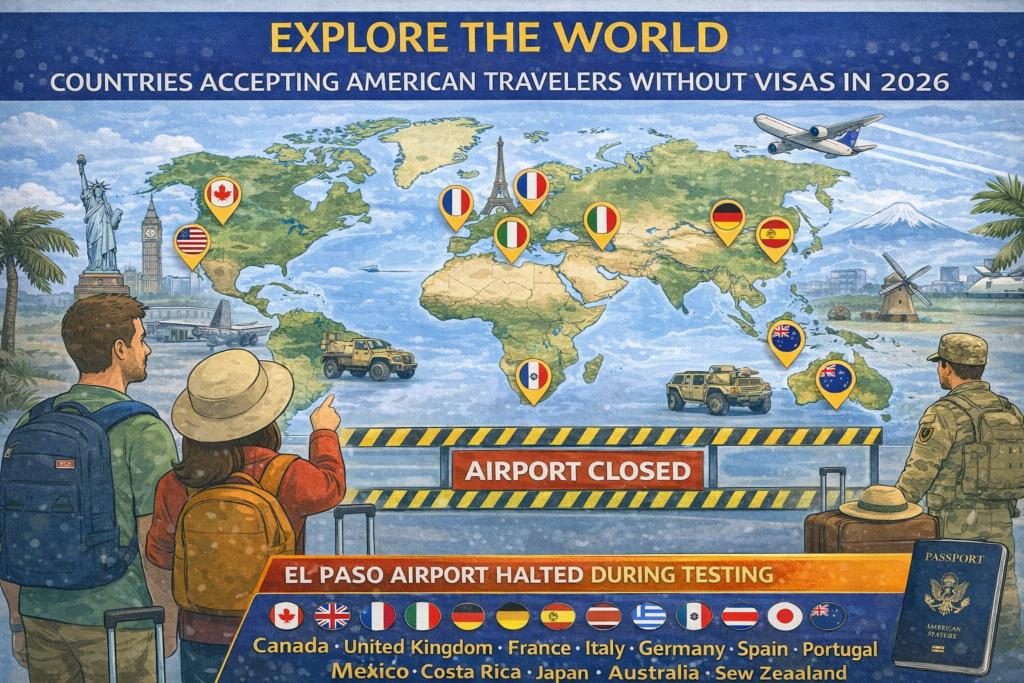
U.S. Passport Power in 2026: Visa-Free Travel, Entry Rules, and New European Requirements
International travel can feel complicated, but one essential document makes it possible: your passport. For American travelers, the U.S. passport remains one of the most powerful in the world—opening the door to dozens of countries without requiring a traditional visa in advance.
Here’s what U.S. travelers need to know about visa-free destinations, additional entry requirements, length-of-stay rules, and new European travel changes coming in 2026.
How Strong Is the U.S. Passport?
According to the Henley Passport Index, which updates its rankings monthly, the U.S. passport recently ranked No. 10 worldwide at the time of publication. It provides access to 179 destinations without requiring a visa before departure.
While passport rankings can change over time, the U.S. passport continues to offer broad global mobility and access to a significant number of countries.
The Henley Passport Index tracks 227 travel destinations and indicates whether they allow:
- Visa-free entry
- Visa on arrival (VOA)
- Electronic travel authorization (ETA)
- Or require a traditional visa
Popular Visa-Free Destinations for Americans
Some of the countries and regions Americans can visit without applying for a visa in advance include:
- Japan
- Egypt
- Chile
- Fiji
- Morocco
- Thailand
- Schengen Area
However, visa-free does not mean requirement-free. Travelers should always check for additional entry conditions before departure.
Additional Requirements in Visa-Free Countries
The Six-Month Passport Validity Rule
Many countries require that your passport be valid for at least six months beyond your date of entry. This is commonly known as the six-month passport validity rule.
Countries such as:
- Brazil
- Fiji
- Thailand
- Venezuela
enforce this rule.
If your passport expires within six months of your planned arrival date, you may be denied boarding or entry. For that reason, travelers should monitor expiration dates and renew early.
ETA vs. Visa on Arrival (VOA): What’s the Difference?
Even in countries that do not require a traditional visa, you may still need one of the following:
Electronic Travel Authorization (ETA)
An ETA is a digital pre-screening system that must be completed online before travel. Once approved, it is electronically linked to your passport.
Countries requiring an ETA include:
- Australia
- Israel
- Kenya
- New Zealand
- United Kingdom
The purpose of an ETA is to streamline border control by screening travelers in advance. No physical documents are required once it is approved.
Visa on Arrival (VOA)
A visa on arrival means you receive your visa at the airport, seaport, or land border when you enter the country, rather than applying at a consulate beforehand.
Countries offering VOA include:
- Cambodia
- Egypt
- Ethiopia
- Maldives
Although a visa is technically required, the ease of obtaining it upon arrival leads the Henley Passport Index to categorize these destinations as visa-free for ranking purposes.
How Long Can Americans Stay in Visa-Free Countries?
Entry permission does not automatically mean unlimited stay. Length-of-stay limits vary widely by destination.
Schengen Area: 90/180-Day Rule
In the Schengen Area—which includes 29 countries such as:
- Austria
- Belgium
- Iceland
- Spain
- Switzerland
U.S. travelers may stay up to 90 days within any 180-day period. Travelers may leave and re-enter, provided they do not exceed the rolling 180-day limit.
Countries Allowing Longer Stays
Some destinations permit extended stays of up to six months (approximately 180 days), including:
- Mexico
- Canada
- United Kingdom
- Costa Rica
Even more generous is:
- Albania, which allows U.S. visitors to stay up to 365 days.
Stay limits are strictly enforced, and overstaying can result in fines, deportation, or future travel restrictions.
New European Travel Requirements Starting in 2026
Beginning in the fourth quarter of 2026, 30 European destinations will require a new travel authorization system for visa-exempt travelers.
The European Commission plans to implement the European Travel Information and Authorisation System (ETIAS).
What Is ETIAS?
ETIAS will require travelers from visa-exempt countries—including U.S. passport holders—to:
- Complete an online application
- Pay a €20 fee (approximately $23)
- Receive travel authorization before departure
Participating countries will include destinations such as:
- Austria
- Denmark
- Finland
- Italy
How Long Will ETIAS Be Valid?
ETIAS authorization will:
- Be electronically linked to your passport
- Remain valid for up to three years or until the passport expires (whichever comes first)
- Allow stays of up to 90 days within any 180-day period, consistent with current Schengen rules
At this time, no action is required for travel prior to implementation. However, travelers planning European trips in late 2026 or beyond should prepare for this additional step.
Key Takeaways for U.S. Travelers
- The U.S. passport ranks among the world’s strongest travel documents.
- Americans can access 179 destinations without a traditional pre-approved visa.
- Visa-free does not eliminate other requirements such as passport validity rules, ETAs, or VOAs.
- The Schengen Area enforces a strict 90/180-day stay policy.
- ETIAS will become mandatory for many European destinations starting in late 2026.
Before any international trip, verify entry rules, passport validity, and length-of-stay limits to avoid travel disruptions.