
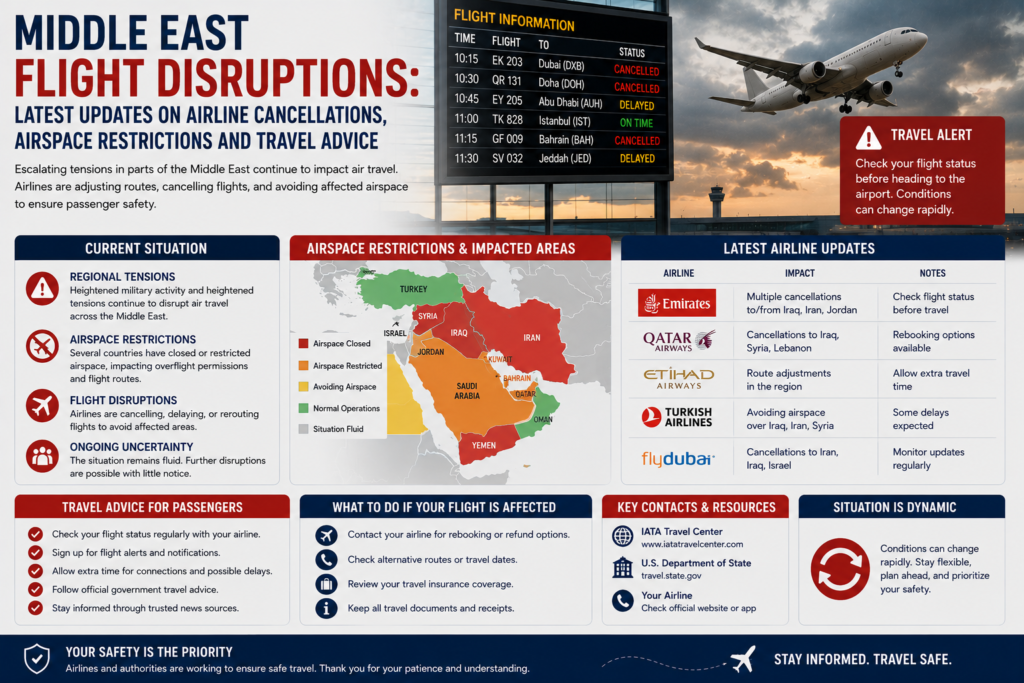
Middle East Flight Disruptions: Latest Updates on Airline Cancellations, Airspace Restrictions and Travel Advice
Air travel across parts of the Middle East continues to face disruption as airlines adjust operations in response to renewed regional tensions, airspace restrictions and changing security conditions.
The situation has affected flight schedules across several countries, with airlines reviewing routes, suspending selected services and using alternative flight paths where required. Travelers passing through major aviation hubs including Dubai, Doha, Abu Dhabi and other regional airports have been advised to check directly with airlines for the latest updates before traveling.
The aviation industry has emphasized that flight changes are being made based on operational and safety assessments, with airlines and aviation authorities continuing to monitor developments.
Why Middle East Flights Are Being Disrupted
The Middle East is one of the world’s most important aviation regions, connecting Europe, Asia, Africa and the Americas through major international hubs.
When security conditions change, airlines may need to adjust operations because commercial aviation depends on stable airspace access, predictable flight routes and safe operating conditions.
Recent tensions involving the United States and Iran have led aviation authorities to review risks associated with certain parts of the region. The European Union Aviation Safety Agency (EASA) advised airlines not to operate through the airspace of Iran, Iraq and Lebanon until August 31, 2026, citing continued security concerns and the possibility of further military developments.
Airlines Modify Schedules and Routes
Airlines operating in and around the Middle East have responded by changing schedules and adjusting flight paths.
Some carriers have temporarily suspended selected services, while others have resumed flights after reviewing operational conditions.
Reuters reported that several airlines began restoring some Middle East services after earlier disruptions, although operations remained subject to changes as the security situation developed.
Airline decisions are made independently, meaning passengers may see different policies depending on the carrier, destination and route involved.
Dubai and Gulf Aviation Hubs Face Close Monitoring
Dubai International Airport (DXB), Abu Dhabi’s Zayed International Airport and Doha’s Hamad International Airport are among the region’s most important aviation centers.
Because millions of passengers use these airports for connections between continents, disruptions can affect travelers who are not flying to or from the Middle East directly.
A passenger traveling from Europe to Asia, for example, may experience changes if their connection depends on a Gulf hub affected by schedule adjustments.
Reports indicate that airlines serving major Gulf airports have continued operating with modified schedules in response to changing conditions.
Airspace Restrictions Affect Global Flight Routes
Airspace restrictions can have a major impact on international aviation because airlines rely on efficient routes to reduce travel time and fuel consumption.
When airlines avoid restricted areas, aircraft may need to take longer routes around affected airspace.
These changes can result in:
- Longer flight times.
- Higher fuel requirements.
- Delays in aircraft rotations.
- Changes to crew schedules.
- Missed passenger connections.
Even when airports remain open, restricted airspace elsewhere can affect flights passing through the region.
Passenger Impact: Delays, Cancellations and Rebooking
Travelers affected by Middle East flight disruptions may experience:
- Cancelled flights.
- Delayed departures.
- Changed connection times.
- Longer travel routes.
- Rebooking requirements.
Passengers should contact their airline for specific information about their reservation.
Airlines typically provide guidance on available options, which may include alternative flights, refunds where applicable or travel credits depending on the circumstances and ticket conditions.
Travel Insurance Considerations
Travelers affected by geopolitical disruptions should review their travel insurance policies carefully.
Coverage varies significantly between policies. Some plans may cover certain delays or cancellations, while others may exclude disruptions caused by conflict, government action or security events.
Passengers should check:
- Whether their destination is subject to travel warnings.
- Whether disruption coverage applies.
- Documentation requirements for claims.
- Airline compensation policies.
Advice for Travelers Flying Through the Middle East
Passengers with upcoming journeys through the region can reduce uncertainty by preparing in advance.
Check airline updates frequently
Flight information can change quickly during periods of regional instability.
Arrive early
Additional airport procedures or longer waiting times may occur during disruption periods.
Keep important documents accessible
Travelers should carry passports, booking details, visas and insurance information.
Avoid relying only on third-party booking platforms
Airlines usually provide the most current information about schedule changes and rebooking options.
Allow extra time for connections
Longer routes and schedule changes may affect connecting flights.
How Airlines Manage Disruptions
Airlines use operational teams to monitor:
- Airspace availability.
- Government advisories.
- Airport conditions.
- Aircraft positioning.
- Crew availability.
- Passenger demand.
A disruption in one location can affect aircraft and crew schedules across an entire airline network.
For this reason, restoring normal operations after a disruption may take time even after restrictions are reduced.
Impact on Global Aviation
The Middle East plays a central role in international air travel.
Airlines based in the Gulf region operate extensive long-haul networks, while airports such as Dubai, Doha and Abu Dhabi serve as major transfer points.
Changes affecting these hubs can influence global flight schedules, particularly routes connecting Asia and Europe.
The disruption also demonstrates how closely connected the global aviation system has become. A regional security issue can quickly affect passengers thousands of miles away.
What Travelers Should Monitor Next
Passengers planning travel through the Middle East should continue monitoring:
- Airline notifications.
- Airport announcements.
- Government travel advisories.
- Aviation authority updates.
Conditions may change rapidly, and airlines may update schedules as new information becomes available.
Final Thoughts
Middle East flight disruptions continue to create uncertainty for travelers as airlines adjust operations and aviation authorities monitor regional security conditions.
While many flights continue operating, passengers should expect that schedules may change and should remain flexible when traveling through affected areas.
The most reliable approach for travelers is to check official airline updates, understand their ticket conditions and allow additional time for possible changes. As airlines continue adapting to the evolving situation, operational decisions will remain focused on maintaining safe and reliable air travel.