Norwegian Air’s World Cup Campaign Shows How Airlines Can Generate Attention Without Major Sponsorship Deals
Airlines often compete for visibility during major global events, but not every carrier has the budget or official status required to become a headline sponsor.
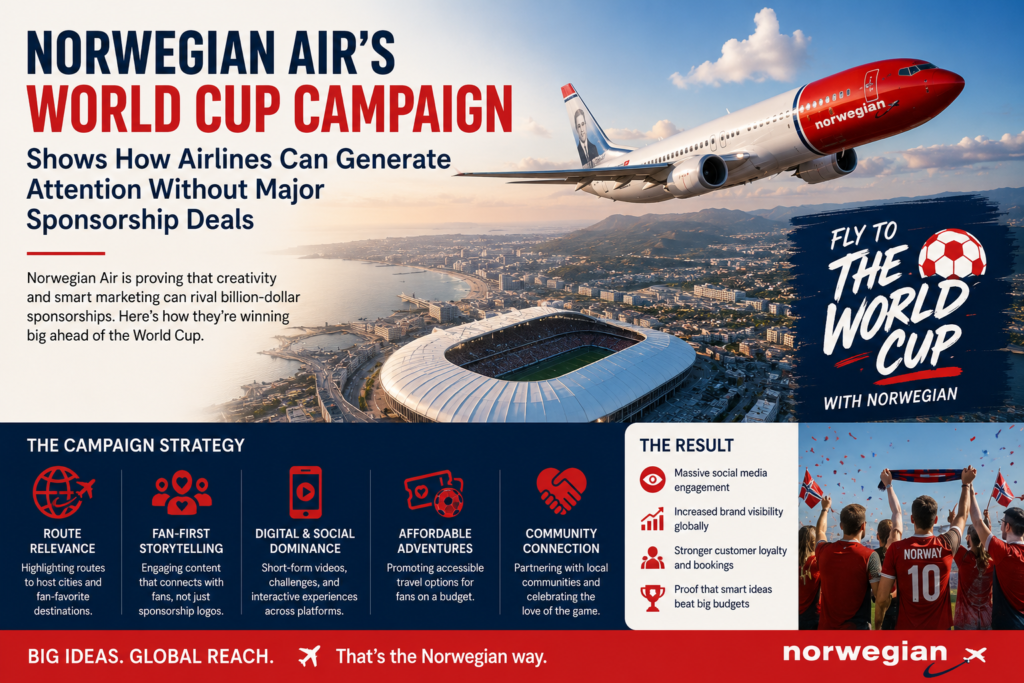
Norwegian Air’s recent World Cup-themed marketing activity demonstrates how airlines can use creativity, social media and timely messaging to attract attention around major sporting events without relying solely on traditional sponsorship arrangements.
The campaign drew attention by using the global interest surrounding football’s biggest tournament to promote the airline’s brand and connect with travelers planning international trips.
Competing for Attention During Global Events
Major sporting events such as the FIFA World Cup create significant opportunities for travel companies.
Millions of fans travel internationally to attend matches, while millions more follow tournament coverage online. Airlines, hotels and tourism companies often use these moments to highlight destinations, travel routes and special offers.
Official sponsorships can provide significant exposure, but they are also expensive. This has encouraged many brands to find alternative ways to participate in conversations around major events.
Norwegian Air’s approach reflects a broader marketing trend: using cultural moments and audience engagement rather than relying only on paid sponsorship visibility.
The Airline’s World Cup-Focused Approach
Norwegian Air used social media and campaign messaging connected to World Cup travel interest to position itself as part of the conversation around football fans and international travel.
The strategy focused on creating attention through timely content rather than presenting the airline as an official tournament partner.
This type of marketing is sometimes described as “real-time marketing,” where brands respond quickly to major events, news or cultural moments to increase relevance.
The effectiveness of such campaigns depends on factors including creativity, audience response and whether the message reaches travelers at the right time.
Why Airlines Target Major Sporting Events
Large sporting events create a natural connection with travel.
Fans may need flights for:
- Attending matches.
- Visiting host cities.
- Meeting other supporters.
- Taking international vacations around event schedules.
For airlines, these events provide opportunities to connect travel with emotion and experience.
A football tournament is not only about transportation; it represents personal memories, national pride and shared experiences. Airlines often attempt to associate their brands with those emotions.
The Challenge of Sponsorship Costs
Official partnerships with global sporting events can require substantial financial investment.
Sponsors typically receive benefits such as:
- Brand visibility.
- Advertising opportunities.
- Official partner status.
- Access to marketing platforms.
However, smaller or budget-focused companies may seek other ways to participate in the public conversation.
Creative campaigns can allow brands to gain attention without paying the cost of official sponsorship rights.
Social Media Has Changed Brand Competition
Digital platforms have transformed how companies compete for attention.
Previously, major advertisers with large budgets often dominated event-related marketing. Today, brands can reach audiences through:
- Social media posts.
- Short-form videos.
- Online communities.
- Influencer partnerships.
- Digital campaigns.
A clever campaign can attract widespread attention if audiences find it relevant or entertaining.
However, online visibility does not always translate directly into ticket sales or long-term customer loyalty. Measuring the actual business impact of marketing campaigns remains a challenge.
Airlines Increasingly Use Creative Branding
Norwegian Air’s campaign reflects a wider industry pattern.
Airlines increasingly use marketing strategies tied to:
- Sports.
- Entertainment.
- Cultural events.
- Seasonal travel trends.
- Destination experiences.
These campaigns aim to make airlines feel more connected to travelers’ lives rather than focusing only on fares and schedules.
Travel Demand Around Major Events
Major sporting events can influence travel patterns.
When tournaments are held internationally, host cities often experience increased demand for:
- Flights.
- Hotels.
- Local transportation.
- Restaurants.
- Tourist attractions.
Airlines typically monitor demand and adjust schedules, capacity and pricing based on expected passenger numbers.
However, increased demand can also create challenges, including higher prices, limited availability and airport congestion.
The Importance of Brand Personality
Airline marketing has traditionally focused on practical benefits such as routes, prices and reliability.
Modern campaigns increasingly focus on brand personality.
A successful campaign can help an airline appear:
- More approachable.
- More connected to customers.
- More culturally aware.
For carriers competing in crowded markets, emotional connection can become an important part of differentiation.
Lessons for the Aviation Industry
Norwegian Air’s World Cup-related activity highlights several lessons for travel brands:
Timing matters
Connecting with major events while public interest is high can increase visibility.
Creativity can compete with budget
Companies do not always need official sponsorship status to participate in important conversations.
Engagement matters
Campaigns that encourage audience interaction may create stronger connections than traditional advertisements.
Marketing should support business goals
Attention is valuable, but airlines ultimately need campaigns to contribute to customer relationships and commercial performance.
The Future of Event-Based Travel Marketing
As competition in aviation continues, airlines are likely to keep experimenting with new ways to reach travelers.
Future campaigns may increasingly combine:
- Social media engagement.
- Personalized offers.
- Data-driven advertising.
- Cultural partnerships.
- Digital experiences.
Major events will continue providing opportunities for brands that can connect travel with moments people care about.
Final Thoughts
Norwegian Air’s World Cup-themed campaign illustrates how airlines can use creativity to gain attention during major global events.
Rather than depending only on expensive sponsorship agreements, brands can participate in cultural conversations through timely and engaging marketing.
For the aviation industry, the lesson is clear: in a competitive marketplace, the ability to connect with travelers emotionally can be just as important as promoting routes and fares.