
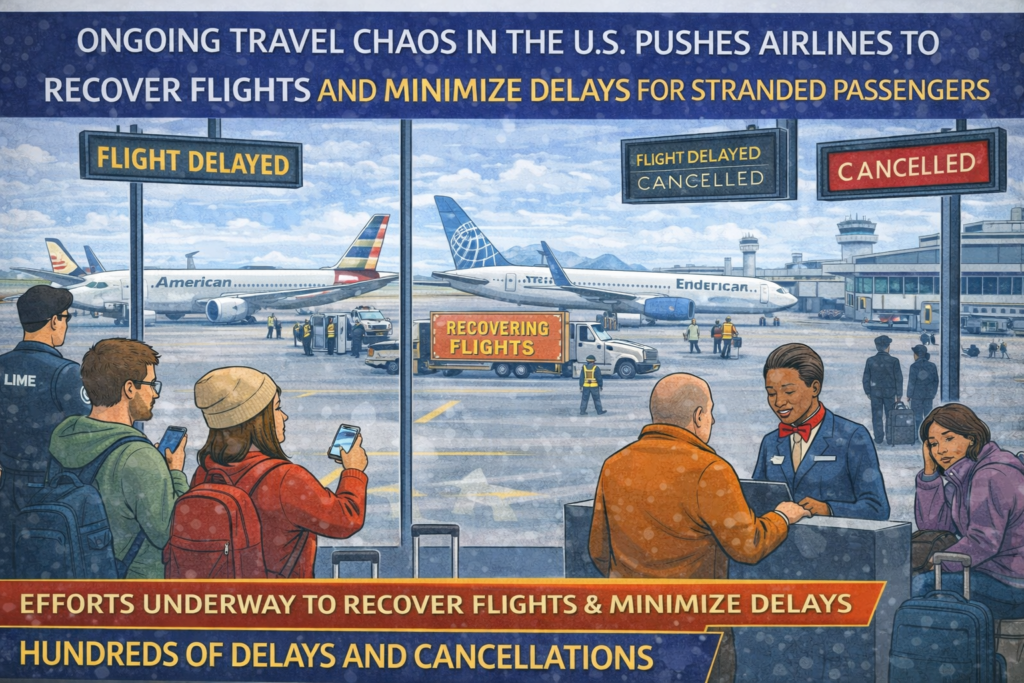
US Travel Chaos Lingers After Winter Storm Grounds Thousands of Flights
Air travel across the United States remains disrupted as airlines work to restore service following one of the most intense winter storms in recent years.
As of 1:30 a.m. New York time on Monday, about 3,500 flights had been canceled, according to FlightAware. That marked a significant drop from roughly 11,600 cancellations on Sunday, when the storm’s impact peaked.
The powerful system coated large parts of the US South and Mid-Atlantic in ice, shutting down several major aviation hubs and causing widespread operational disruptions.
Airlines Struggle to Restore Normal Schedules
Carriers say they are moving quickly to resume flights, but recovery will take time.
Lingering frigid temperatures and icy airport conditions continue to create hazardous conditions for airline staff and travelers. Icy roads and highways are also complicating airport access.
Aircraft and crews are now scattered across the country after days of cancellations, making it difficult for airlines to immediately return to normal schedules.
Major Airlines Outline Recovery Plans
Several major carriers have detailed their plans to resume service:
- United Airlines Holdings Inc. said it would begin restoring operations Monday, though some regions will continue to experience disruptions due to cold and icy conditions.
- JetBlue Airways Corp., which canceled more than 70 percent of its flights on Sunday, plans to resume its regular schedule once the storm fully clears. The airline also intends to add extra flights to help affected customers.
- Delta Air Lines Inc. said freezing weather continues to affect operations, though crews are working to return planes and staff to their proper locations.
Dangerous Cold to Prolong Travel Disruptions
Although the storm system is beginning to move out of the US, hazardous weather is expected to linger.
The Weather Prediction Center has warned that extremely cold air trailing the storm will extend dangerous travel conditions and strain infrastructure throughout the week.
Heavy snow is forecast to continue across the Northeast. Sleet and freezing rain are expected to impact parts of the Mid-Atlantic and Southeast, further slowing recovery efforts.
Sunday marked one of the highest daily flight cancellation totals in recent memory.
Federal Government Shutdown Adds to Travel Uncertainty
As airlines work to stabilize operations, another issue is creating uncertainty for travelers. A partial federal government shutdown began shortly after midnight Saturday when lawmakers failed to reach a funding agreement.
What Happened?
The U.S. Department of Homeland Security halted many operations after Congress did not pass a funding bill.
While much of the political debate has focused on immigration enforcement, the department also oversees airport security and customs operations.
TSA Officers Working Without Pay
The shutdown affects the Transportation Security Administration, which falls under Homeland Security.
About 95 percent of TSA employees are classified as essential workers. Airport security checkpoints will remain open, but officers are required to report to work without immediate pay.
During the previous prolonged shutdown, there were reports of increased employee absences. In Houston, staffing shortages led to lengthy security lines at:
- George Bush Intercontinental Airport
- William P. Hobby Airport
While most checkpoints continued operating smoothly, history shows that longer shutdowns tend to increase the risk of delays.
Customs and Border Protection Also Impacted
Passport control operations may also face strain.
Officers with U.S. Customs and Border Protection must continue working without pay during the shutdown, potentially affecting wait times at major international gateways.
Flight Delays from Air Traffic Control Unlikely
One key difference from the previous shutdown is that the U.S. Department of Transportation has already been funded.
That means the Federal Aviation Administration and air traffic controllers will continue working with full funding, reducing the likelihood of widespread flight cancellations tied to staffing shortages in control towers.
National Parks and Museums Remain Open
Because the U.S. Department of the Interior is funded, national parks will remain open.
Federally supported attractions such as the Smithsonian Institution museums in Washington will also continue operating.
What Travelers Should Do Now
Travelers flying in the coming days should:
- Monitor their airline’s app and alerts closely
- Check airport social media accounts for security wait time updates
- Arrive earlier than usual in case of long TSA lines
The MyTSA app, which typically tracks live checkpoint wait times, did not function during the last shutdown and may not provide reliable updates.
Consider TSA PreCheck or Global Entry
Passengers enrolled in TSA PreCheck can move through security faster at participating airports. Travelers who receive PreCheck access through Global Entry can also benefit.
Eligible travelers may opt into the TSA PreCheck Touchless ID program at select airports for faster screening.
For international arrivals, Global Entry remains one of the quickest ways to clear passport control. Nonmembers can use the Mobile Passport Control program at many US airports to reduce wait times.
Long-Term Staffing Concerns
While widespread travel delays are not yet expected from the shutdown alone, officials have warned of long-term impacts.
In a recent report to Congress, TSA leadership said the previous shutdown led to a 25 percent increase in officers leaving the workforce.
That staffing challenge comes as the agency prepares for increased travel demand ahead of major events such as the FIFA World Cup in the United States.
Ha Nguyen McNeill, the TSA’s acting administrator, told lawmakers that another prolonged shutdown could severely affect the agency’s ability to meet staffing needs.
Bottom Line
US air travel is facing a dual challenge: recovery from a severe winter storm and uncertainty from a federal government shutdown.
While airlines are steadily restoring service and air traffic control operations remain funded, cold weather, staffing pressures and potential security checkpoint delays could continue affecting travelers in the days ahead.