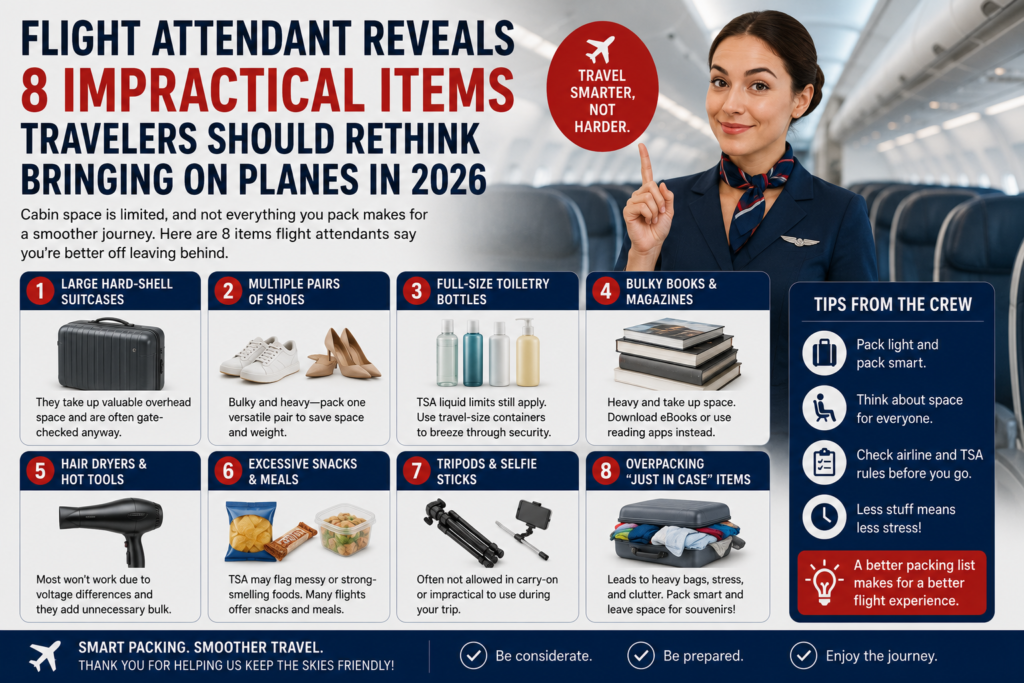
Flight Attendant Reveals 8 Impractical Items Travelers Should Rethink Bringing on Planes in 2026
Air travel has become increasingly crowded, with passengers carrying more personal items, electronic devices and comfort products than ever before. While many travel accessories are designed to make flying easier, some items can create unnecessary inconvenience for passengers and crew members, especially in crowded aircraft cabins.
A flight attendant featured in a recent Travel + Leisure discussion shared a list of items they consider impractical for air travel. The recommendations reflect one crew member’s experience working in aircraft cabins rather than universal airline rules. However, the concerns behind many of these suggestions align with broader aviation guidance about safety, cabin space, passenger comfort and efficient boarding.
As airlines continue operating flights with high passenger volumes, travelers can benefit from considering what they actually need onboard and what may create unnecessary complications.
1. Oversized Carry-On Bags That Do Not Fit Cabin Restrictions
One of the most common problems flight crews encounter is passengers bringing carry-on luggage that exceeds available cabin space.
Airlines establish carry-on size limits to ensure bags can safely fit in overhead compartments and do not block emergency equipment, aisles or exits. Although dimensions vary by airline, most major carriers restrict the size and number of cabin bags passengers can bring.
Oversized luggage can slow boarding because passengers may spend extra time searching for space or may need to check their bags at the gate.
The U.S. Federal Aviation Administration (FAA) requires aircraft aisles and emergency exits to remain unobstructed, making proper baggage storage an important safety issue.
Travelers can reduce problems by checking their airline’s current carry-on rules before arriving at the airport and choosing smaller, lightweight bags when possible.
2. Large Travel Pillows That Take Up Excessive Space
Travel pillows are among the most popular airplane comfort accessories, but some designs can be difficult to manage in a crowded cabin.
Large pillows that attach to seats, wrap around the entire head or occupy significant personal space may interfere with neighboring passengers or make movement more difficult.
Flight attendants often recommend choosing compact, inflatable or easily stored options instead of bulky designs.
Passengers should also remember that airline seats are shared spaces. Accessories that extend into another passenger’s area may create discomfort during long flights.
3. Excessive Personal Items Attached to Carry-On Bags
Many travelers use backpacks, luggage straps, blankets, water bottles and other accessories attached to their carry-on luggage.
While these items may be useful, excessive attachments can create challenges during boarding and security screening.
Loose straps or oversized accessories may become caught on seats, luggage bins or other passengers while moving through the cabin.
Travel experts generally recommend keeping belongings organized and limiting the number of loose items carried onboard.
A simple packing approach can make boarding faster and reduce the risk of leaving items behind.
4. Bulky Clothing That Becomes Difficult to Manage
Comfortable clothing is widely encouraged during flights, especially on long journeys. However, extremely bulky clothing can become inconvenient in a confined aircraft environment.
Large coats, oversized blankets and multiple layers may take up valuable seat or overhead space.
Passengers traveling during colder months can often benefit from wearing layers that are easy to remove and store rather than carrying large items separately.
Airlines do not generally prohibit comfortable clothing, but practical choices can improve both personal comfort and cabin organization.
5. Items That Create Strong Odors
Cabin air is shared among dozens or hundreds of passengers, making strong smells more noticeable during flights.
Foods with powerful odors, heavily scented products and certain personal items may affect nearby travelers, particularly on long flights where passengers cannot easily move away.
While passengers are allowed to bring many types of food and personal products onboard, consideration for fellow travelers remains an important part of air travel etiquette.
The Transportation Security Administration (TSA) provides guidance on permitted food and liquids, but approval for transport does not necessarily mean an item is ideal for consumption or use inside a crowded cabin.
6. Complicated Entertainment or Technology Setups
Electronic devices have become essential travel companions, but overly complicated setups can create challenges.
Multiple large devices, extensive charging equipment and accessories spread across a tray table may reduce personal space and make it harder to respond to crew instructions.
Passengers should also remember that airlines and regulators have specific rules regarding electronic devices during different phases of flight.
The FAA allows passengers to use many portable electronic devices during flights when airlines permit it, but devices must generally be secured during takeoff, landing and other critical phases of flight.
Travelers can make flying easier by bringing only the devices they actually expect to use.
7. Excessive Comfort Equipment
Travelers increasingly purchase products designed to improve sleep and relaxation during flights, including inflatable footrests, seat attachments and other cabin accessories.
However, some comfort products may not be compatible with airline seating arrangements or safety requirements.
The FAA and airlines require passengers to keep areas around seats, aisles and emergency exits clear. Some airlines may restrict accessories that interfere with seat operation or evacuation procedures.
Passengers should check airline policies before bringing specialized travel equipment onboard.
8. Too Many Small Items Without Proper Organization
A collection of small travel items—chargers, cables, medication, snacks, documents and personal accessories—can become difficult to manage if they are not organized.
Flight attendants frequently emphasize that passengers should keep essential items accessible without creating clutter.
A disorganized seat area can make it harder to find important documents during boarding, respond quickly to crew instructions or prepare for arrival.
Using a small travel pouch or organizer can help keep frequently used items together.
What Flight Attendants Want Passengers to Remember
The main concern behind many cabin-related recommendations is not appearance or personal preference. It is efficiency.
Flight attendants are responsible for safety procedures, passenger assistance and maintaining orderly cabin operations. During busy boarding periods, small delays caused by oversized bags, misplaced belongings or difficult-to-manage items can affect departure schedules.
Simple preparation helps create a smoother experience for everyone onboard.
Safety Rules Still Come First
Although many travel recommendations focus on convenience, safety remains the primary consideration for airlines and aviation authorities.
Passengers must follow crew instructions regarding:
- seat belt use,
- baggage storage,
- emergency exits,
- electronic devices,
- and cabin movement.
Items that interfere with these requirements may be restricted regardless of how useful they appear.
TSA Rules Travelers Should Check Before Flying
Before packing, passengers should review TSA guidelines and airline policies because restrictions can change.
Common areas to check include:
- liquids and gels,
- batteries and electronic equipment,
- sports equipment,
- oversized luggage,
- food items,
- and special medical equipment.
TSA rules apply to security screening, while airlines determine many cabin baggage requirements.
Understanding both sets of rules can prevent delays at the airport.
How to Pack More Efficiently for Air Travel
Travel experts recommend several strategies for avoiding unnecessary items:
Choose multipurpose products
Items that serve multiple functions can reduce the amount of equipment needed.
Pack according to the length of the flight
A short domestic trip usually requires fewer comfort items than a long international journey.
Keep essentials accessible
Identification, medication, chargers and travel documents should be easy to reach.
Check airline rules before departure
Different airlines have different limits for baggage size, weight and onboard accessories.
The Future of Air Travel: Less Clutter, More Efficiency
As passenger numbers continue growing, airlines are focusing on faster boarding, improved reliability and better use of cabin space.
For travelers, this means thoughtful packing is becoming increasingly important.
The goal is not to eliminate personal comfort items but to choose items that provide genuine value without creating unnecessary difficulties for passengers or crew.
Final Thoughts
The advice shared by the flight attendant in Travel + Leisure reflects a broader message from aviation professionals: travelers should think carefully about what they bring onto an aircraft.
Many items that seem helpful at home may become inconvenient in the limited space of an airplane cabin. By choosing practical luggage, organizing personal belongings and following airline and TSA requirements, passengers can make their journeys smoother while helping cabin crews maintain a safe and comfortable environment.
In 2026, smart packing is less about bringing more and more about bringing what is genuinely useful.