
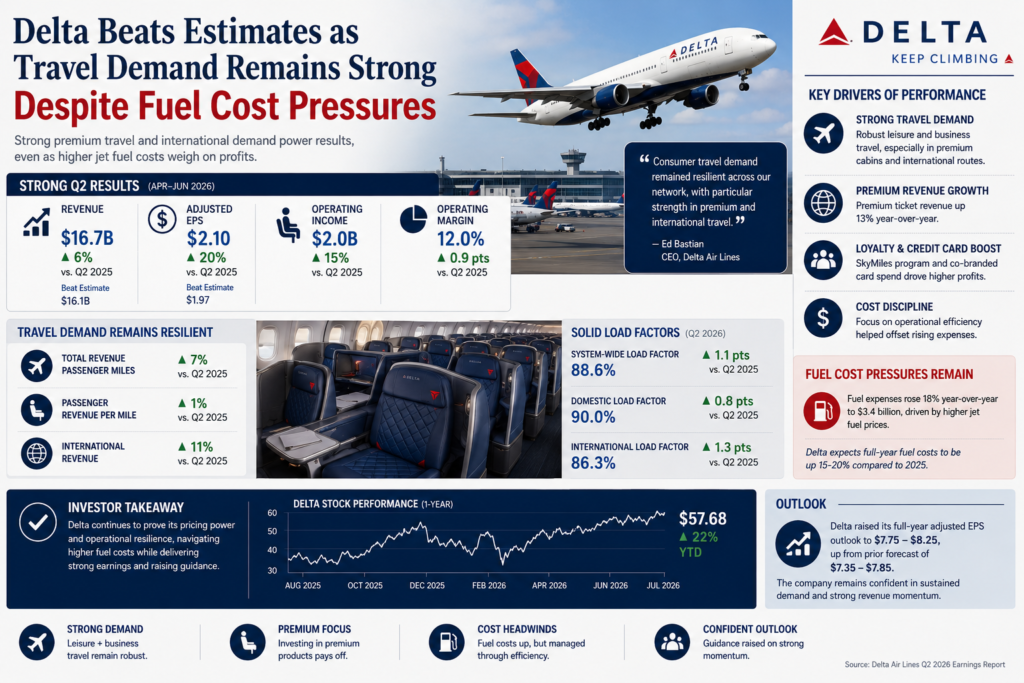
Delta Beats Estimates as Travel Demand Remains Strong Despite Fuel Cost Pressures
Delta Air Lines reported stronger-than-expected financial results as continued demand for air travel helped offset pressure from higher operating expenses, including fuel costs.
The airline’s performance reflects the ongoing strength of the travel market, particularly in premium cabins and international flying, as consumers continue prioritizing trips despite economic uncertainty and rising costs in some areas of the aviation sector.
Delta’s results also provide insight into the broader airline industry, where carriers are balancing strong passenger demand with challenges including fuel prices, labor expenses, aircraft availability and operational costs.
Delta Reports Better-Than-Expected Results
Delta Air Lines said its latest earnings exceeded Wall Street expectations, supported by strong revenue performance and continued demand across its network.
The company reported that travel demand remained resilient, with particularly strong performance in premium travel and international markets.
Delta executives have pointed to continued consumer interest in travel as a key factor supporting financial results. The airline has also highlighted growth in areas such as corporate travel, loyalty program activity and premium products.
However, while demand has remained strong, airlines continue to face significant cost pressures that affect profitability.
Travel Demand Continues to Support Airline Revenues
The post-pandemic recovery in air travel has continued to reshape airline finances.
After years of disruption caused by COVID-19 restrictions, travelers have returned in large numbers, with demand for leisure trips remaining particularly strong.
Airlines have benefited from passengers showing willingness to spend on:
- International vacations.
- Premium cabin upgrades.
- Longer-distance trips.
- Experiences and destination travel.
Delta has repeatedly identified premium travel as an important growth area. Business-class and premium economy demand have remained strong as some travelers prioritize comfort and flexibility.
Fuel Costs Remain a Major Challenge
Fuel is one of the largest expenses for airlines, and changes in energy prices can significantly affect operating costs.
Even when passenger demand is strong, higher fuel expenses can reduce profit margins.
Airlines typically manage fuel risk through a combination of pricing strategies, operational efficiency efforts and capacity planning.
Delta’s results demonstrate the challenge facing carriers: strong ticket demand does not eliminate the impact of rising expenses.
Premium Travel Helps Support Airline Revenue
One of the most important trends in recent airline earnings has been the continued strength of premium travel.
Delta has invested heavily in higher-end products, including its Delta One business-class cabin, premium lounges and loyalty program offerings.
The airline has said customers continue to place value on additional comfort and services, particularly on longer flights.
This trend has encouraged major airlines to expand premium products and introduce new fare options designed to attract different types of travelers.
At the same time, some industry observers have questioned whether airlines are creating more complicated pricing structures by separating benefits that were previously bundled together.
International Travel Remains an Important Growth Area
International travel has been a major source of recovery for global airlines.
Delta has expanded international operations and continues serving destinations across Europe, Asia, Latin America and other regions.
International flights often generate higher revenue per passenger compared with many domestic routes, particularly when premium cabin demand is strong.
However, international operations can also face additional challenges, including currency fluctuations, geopolitical issues and changing regulatory requirements.
Airline Industry Recovery and Competition
Delta’s results come as major U.S. airlines compete for passengers in an increasingly competitive market.
Carriers are investing in:
- New aircraft.
- Improved customer technology.
- Airport facilities.
- Premium services.
- Loyalty programs.
At the same time, airlines are carefully managing capacity growth because adding too many seats can pressure ticket prices.
The balance between supply and demand remains one of the most important factors influencing airline profitability.
Operational Challenges Continue Across Aviation
Despite strong demand, airlines continue dealing with operational constraints.
Challenges include:
Aircraft availability
Manufacturing delays and supply chain problems have affected aircraft deliveries across the industry.
Maintenance capacity
Airlines must maintain aircraft while managing high passenger demand.
Staffing pressures
Pilot shortages and labor costs remain important industry issues.
Airport congestion
Busy airports can create delays that affect airline operations.
These challenges mean that strong demand alone does not guarantee smooth operations or higher profits.
What Delta’s Results Mean for Travelers
Strong airline earnings can provide insight into travel conditions, but they do not necessarily mean cheaper fares.
When demand remains high, airlines may maintain stronger pricing, particularly on popular routes and during peak travel periods.
Travelers may continue to see:
- Higher prices for peak-season flights.
- Strong demand for premium seats.
- More fare differences between service levels.
- Greater emphasis on loyalty programs.
Passengers looking for lower fares may still find opportunities by booking early, traveling during less busy periods and comparing different routes.
The Role of Corporate Travel
Corporate travel has been another important factor in airline recovery.
While business travel patterns have changed since the pandemic, companies continue sending employees on important trips, conferences and meetings.
Delta has reported improvement in corporate travel demand, particularly among larger business customers.
However, the industry continues to monitor whether business travel will fully return to previous levels or remain permanently changed because of remote work and virtual meetings.
Airline Pricing Strategies Are Changing
Delta’s financial performance also comes during a period of major changes in airline pricing.
Carriers are increasingly offering different versions of the same cabin, allowing passengers to choose between lower prices and additional benefits.
Examples include differences in:
- Seat selection.
- Flexibility.
- Baggage allowances.
- Lounge access.
- Loyalty rewards.
Airlines argue that these options give travelers more control. Critics say they can make comparing fares more complicated.
Looking Ahead: What Could Affect Delta’s Performance
Future airline results will depend on several factors, including:
- Fuel prices.
- Consumer demand.
- Economic conditions.
- International travel trends.
- Labor costs.
- Aircraft availability.
If travel demand remains strong, airlines may continue benefiting from high passenger volumes. However, cost pressures will remain a central issue.
Final Thoughts
Delta Air Lines’ stronger-than-expected results highlight the continued strength of the travel market and the willingness of many consumers to continue spending on air travel.
The airline’s performance shows that demand remains a major source of support for carriers, particularly in premium and international markets.
At the same time, airlines continue facing significant challenges from fuel costs, operational expenses and industry-wide capacity constraints.
Delta’s results offer a broader picture of modern aviation: travelers remain eager to fly, but airlines must carefully manage costs and operations to turn strong demand into sustainable financial performance.