New Airline Travel Rules Could Disrupt Summer Flights Without Advance Planning
What Passengers Need to Know
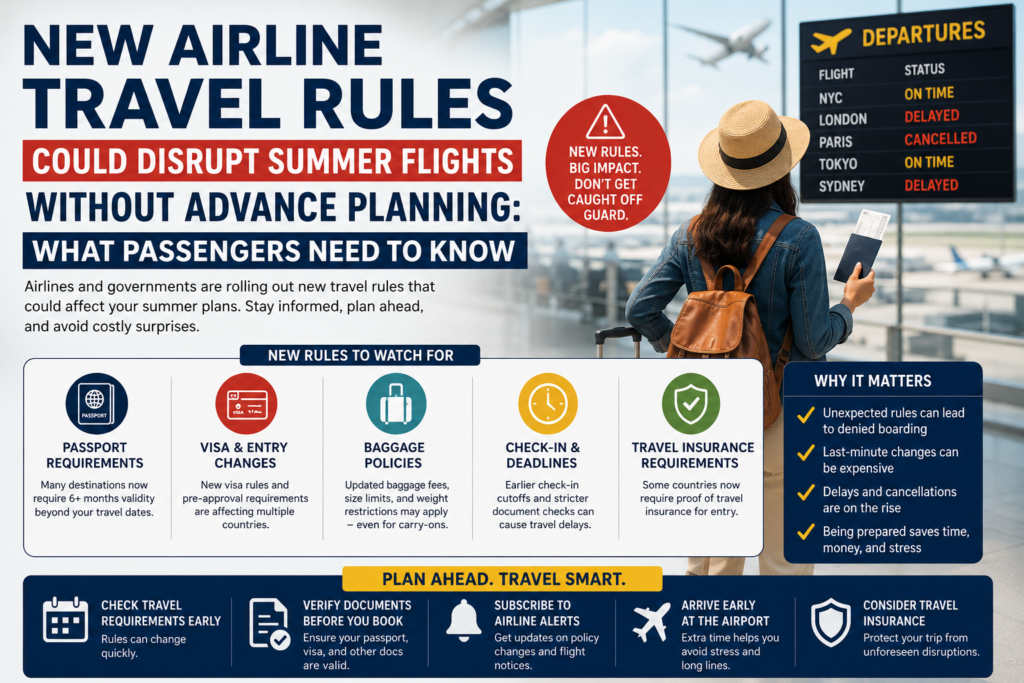
Millions of Americans are expected to travel during the summer vacation season, but several airline policy changes introduced in 2026 could catch passengers off guard if they are not prepared before arriving at the airport.
From updated seating policies and identification requirements to revised baggage rules and airline-specific boarding procedures, travelers are being encouraged to review their airline’s latest policies well before departure. Travel experts say many of these changes are intended to improve operational efficiency, but they could also result in unexpected costs, boarding delays or even denied travel for passengers who fail to plan ahead.
Summer Travel Expected to Remain Strong
Despite economic uncertainty and global geopolitical tensions, travel demand remains robust.
According to projections from AAA cited by WSMV, approximately 72 million Americans are expected to travel during the summer period by air or road, making advance preparation increasingly important as airports and airlines manage higher passenger volumes.
With millions of travelers expected to pass through U.S. airports over the coming months, even small policy changes can have a significant impact on airport operations and passenger experiences.
Airlines Continue Updating Passenger Policies
Several U.S. airlines have revised customer policies over the past year, affecting everything from checked baggage to seating arrangements and boarding procedures.
Unlike federal aviation regulations, many of these rules are airline-specific. That means travelers who frequently switch between carriers may encounter different requirements depending on the airline they are flying.
Experts recommend reviewing an airline’s conditions of carriage, baggage policies and travel advisories before every trip rather than assuming rules remain unchanged from previous flights.
Southwest Introduces New Seating Requirement for Some Passengers
Among the most discussed changes this year is Southwest Airlines’ updated policy regarding passengers who require additional seating.
Beginning January 27, 2026, the airline requires passengers whose body extends beyond the armrest into an adjacent seat to purchase an additional seat before travel. According to WSMV, the policy has generated criticism from some travelers after reports of passengers being required to pay for an extra seat at the airport before boarding.
Southwest says the policy is intended to ensure that every customer has access to the seat space they have purchased and to improve onboard comfort.
Because seating-related policies differ among airlines, travelers who believe they may require additional space are encouraged to review the specific requirements of their chosen carrier before booking.
REAL ID Requirements Continue to Affect Domestic Travelers
Another major consideration for U.S. passengers is compliance with the federal REAL ID requirement.
Adults traveling on domestic flights must present an acceptable form of identification at airport security checkpoints. A REAL ID-compliant driver’s license is one acceptable option, while passports and several other federally approved identification documents also remain valid.
Passengers who arrive without acceptable identification may face additional screening or may not be permitted to proceed through security, depending on the circumstances.
Travel experts recommend confirming identification requirements several weeks before departure to avoid last-minute complications.
Baggage Rules Still Vary by Airline
Checked baggage policies continue to differ significantly among U.S. airlines.
Fees, weight limits, carry-on allowances and personal-item dimensions vary by carrier and, in many cases, by ticket type.
Basic economy fares often include the fewest baggage benefits, while premium cabins or elite frequent flyer members may receive complimentary checked luggage.
Travelers are advised to measure and weigh bags before leaving home to avoid overweight or oversized baggage charges at the airport.
Seat Selection May Involve Additional Fees
Many airlines continue to separate ticket prices from optional services such as advance seat selection.
Passengers purchasing the lowest-priced fares may not be able to choose seats without paying an additional fee. In some cases, seat assignments are made automatically during check-in.
Families traveling together are encouraged to review seating policies carefully before booking if sitting together is a priority.
Arriving Earlier Than Before
Airport security officials continue to recommend that passengers arrive well in advance of scheduled departure times.
Longer wait times during peak travel periods may result from increased passenger volumes, security screening and airline check-in procedures.
Travel experts generally recommend arriving at least two hours before domestic flights and three hours before international departures, particularly during busy holiday weekends and summer vacation periods.
Mobile Notifications Can Prevent Surprises
Airlines increasingly rely on mobile applications and text notifications to communicate operational changes.
Gate assignments, boarding times, delays and cancellations can change rapidly, especially during periods of severe weather.
Passengers who enable airline notifications on their smartphones may receive updates earlier than those relying solely on airport information displays.
Many airlines also allow travelers to manage bookings, request rebooking after disruptions and download digital boarding passes through their mobile applications.
Weather Continues to Be a Major Source of Delays
Even with updated airline policies, weather remains one of the leading causes of flight disruptions.
Thunderstorms, hurricanes, snowstorms and strong winds frequently affect airport operations across the United States during different seasons.
Because aircraft and flight crews operate interconnected schedules, delays at one airport can quickly spread throughout an airline’s network.
Passengers traveling during severe weather are encouraged to monitor forecasts and consider flexible travel options when available.
Know Your Airline’s Change and Refund Policies
Airlines have different rules regarding cancellations, flight changes and refunds.
While many carriers now offer greater flexibility than they did several years ago, the terms still depend on the type of ticket purchased.
Basic economy fares often carry more restrictions than standard economy tickets.
Reviewing fare conditions before booking can help travelers avoid unexpected fees if plans change.
Tips to Avoid Airport Problems
Travel experts recommend taking several simple steps before departure:
- Confirm that your identification meets federal requirements.
- Review your airline’s baggage size and weight limits.
- Check seating policies before booking.
- Download the airline’s mobile app.
- Monitor your flight status before leaving for the airport.
- Arrive early, especially during weekends and holidays.
- Keep important travel documents easily accessible.
These steps can help reduce stress and minimize the likelihood of unexpected delays at the airport.
Technology Is Improving the Passenger Experience
Many airlines continue investing in digital tools designed to improve customer service.
Mobile boarding passes, self-service bag drops, automated check-in kiosks and real-time flight notifications have become standard features across much of the airline industry.
Some carriers have also expanded biometric boarding programs at selected airports, helping speed up the boarding process for participating passengers.
Although technology cannot eliminate weather-related delays, it can make it easier for passengers to receive updates and adjust travel plans.
Read Airline Policies Before Every Trip
One of the most important messages from travel experts is that passengers should not assume airline policies remain the same from one trip to the next.
Airlines regularly update their conditions of carriage, baggage allowances, seating rules and boarding procedures in response to operational needs, regulatory changes and customer feedback.
Reading the latest travel information before departure can help passengers avoid unexpected costs or complications at the airport.
Outlook for the Summer Travel Season
The U.S. airline industry expects another busy summer as millions of travelers take vacations, visit family and travel for business.
While airlines and airports continue working to improve efficiency, passengers also play an important role in ensuring smooth journeys by arriving prepared and understanding the rules that apply to their specific itinerary.
From updated seating requirements to identification and baggage policies, advance planning remains one of the best ways to reduce travel disruptions.
For travelers, the key takeaway is straightforward: reviewing airline policies before heading to the airport may save time, money and unnecessary stress during one of the busiest travel seasons of the year.