Traveling for Fourth of July? Here’s How California Airports Rank for Flight Delays
Millions of travelers are expected to take to the skies during the Fourth of July holiday period, and passengers flying from California airports may want to plan ahead as new data shows how the state’s major airports have historically performed during the busy holiday travel period.
A recent analysis examined delay and cancellation rates at major U.S. airports during Independence Day travel periods and found that California airports generally ranked among the better-performing airports nationwide for avoiding disruptions. The study, based on U.S. Department of Transportation flight data, compared airport performance using historical delay and cancellation records.
While the rankings provide insight into past holiday performance, aviation officials continue to warn that actual Fourth of July travel conditions can vary depending on weather, air traffic volume, staffing and airline operations.
California Airports Rank Lower for Holiday Disruptions
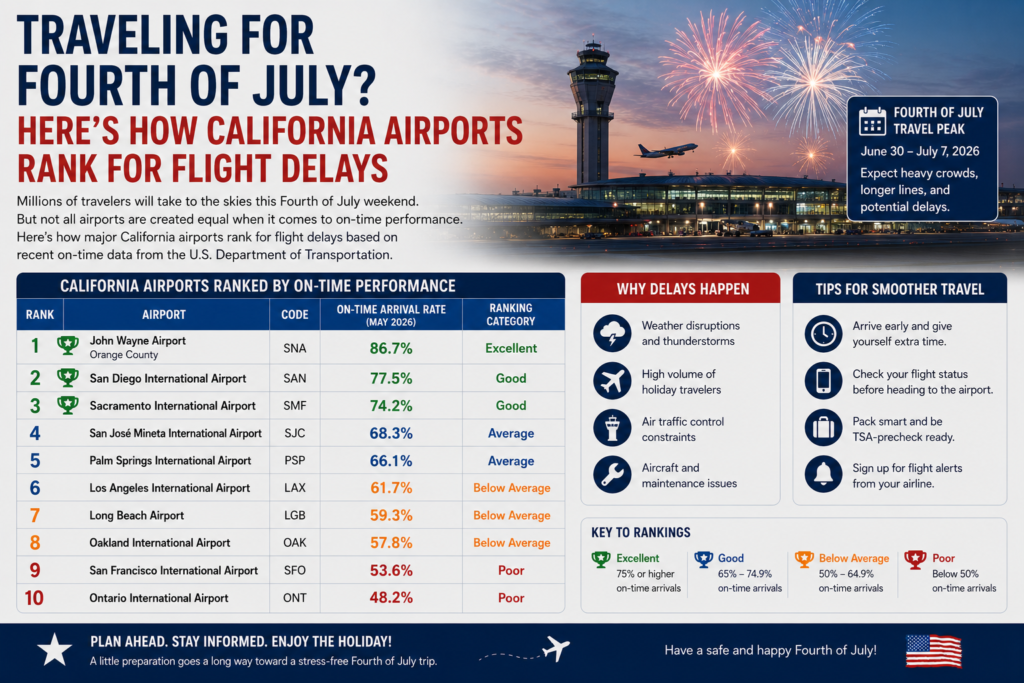
According to the analysis reported by The Desert Sun and USA TODAY Network, seven California airports included in the study ranked in the lower half of the national list for Fourth of July delays and cancellations. In this ranking system, lower positions represented fewer disruptions compared with other airports analyzed.
The California airports included were:
- San Diego International Airport
- Oakland San Francisco Bay Airport
- Sacramento International Airport
- Los Angeles International Airport
- San Francisco International Airport
- John Wayne Airport (Orange County)
- Norman Y. Mineta San José International Airport
The study reviewed historical holiday flight performance rather than predicting exact conditions for the upcoming travel weekend.
San Diego International Airport
San Diego International Airport ranked highest among California airports included in the analysis, placing 36th nationally.
The study reported that San Diego International recorded approximately:
- 22.7% delayed flights
- 0.6% canceled flights
during the periods examined.
San Diego International is one of California’s busiest airports and serves a large number of leisure and business travelers. Like many coastal airports, operations can be affected by weather conditions, air traffic volume and airport capacity constraints.
Travelers using San Diego International during the holiday period are encouraged to check airline updates before leaving for the airport and allow additional time during peak travel hours.
Oakland San Francisco Bay Airport
Oakland’s airport ranked 38th nationally in the study.
The analysis found:
- 22.2% delayed flights
- 0.3% canceled flights
during the reviewed Fourth of July travel periods.
Oakland serves as an alternative airport for travelers in the San Francisco Bay Area and often attracts passengers looking for additional airline choices or different route options compared with nearby airports.
Sacramento International Airport
Sacramento International Airport ranked 39th in the national comparison.
The study reported:
- 21.8% delayed flights
- 0.5% canceled flights
during the analyzed holiday periods.
As California’s capital city airport, Sacramento handles a mix of government, business and leisure travel. Passenger traffic typically increases during major holiday periods as families and vacation travelers begin summer trips.
Los Angeles International Airport
Los Angeles International Airport (LAX), one of the busiest airports in the world, ranked 40th in the study.
The reported figures were:
- 21.4% delayed flights
- 0.6% canceled flights
during the analyzed Fourth of July travel periods.
Despite handling a very large number of passengers, LAX performed better than many other major airports included in the comparison.
The airport’s size and international connectivity make it a major hub for domestic and global travel. However, travelers should still expect busy terminals during holiday periods.
San Francisco International Airport
San Francisco International Airport ranked 41st nationally.
The study reported:
- 20.2% delayed flights
- 0.7% canceled flights
during the reviewed periods.
San Francisco International serves as a major gateway for international flights and technology-sector business travel.
The airport’s operations can sometimes be influenced by coastal weather conditions, including fog, as well as regional air traffic patterns.
John Wayne Airport (Orange County)
John Wayne Airport ranked 42nd in the national analysis.
The reported figures were:
- 20.1% delayed flights
- 0.7% canceled flights
during the study period.
The airport serves Orange County and is known for operating under specific noise restrictions that influence flight schedules.
Passengers traveling through John Wayne during busy holiday periods should continue monitoring airline notifications because schedule changes can occur even at airports with historically lower disruption rates.
San José International Airport
Norman Y. Mineta San José International Airport ranked 43rd, making it the highest-ranked California airport in the study when fewer delays and cancellations are considered a positive outcome.
The analysis reported:
- 19.6% delayed flights
- 0.4% canceled flights
during the reviewed Fourth of July periods.
San José International serves Silicon Valley and the broader Bay Area, with significant business and leisure travel demand.
Why Fourth of July Travel Can Be Difficult
The Independence Day holiday is one of the busiest travel periods in the United States.
Higher passenger volumes put additional pressure on airports, airlines and air traffic systems. Summer weather can also create challenges, especially thunderstorms that affect aircraft movements and airport operations.
A separate analysis from Upgraded Points using Bureau of Transportation Statistics data found that several U.S. airports historically experience higher delay rates during the Fourth of July travel period, particularly airports affected by heavy summer tourism and weather disruptions.
Weather Remains a Major Factor
Historical rankings cannot predict whether a specific flight will be delayed.
Weather is one of the biggest variables affecting holiday travel. Thunderstorms, strong winds, wildfire conditions and reduced visibility can temporarily slow airport operations.
California airports may also be affected by weather conditions elsewhere because airlines operate interconnected networks. A delay at an airport in another state can affect aircraft and crew availability later in the day.
Travelers Should Still Prepare for Crowded Airports
Even airports with stronger historical performance can experience busy conditions during major holidays.
Travelers flying over the Fourth of July period should consider:
- Arriving early for check-in and security screening.
- Checking flight status before heading to the airport.
- Keeping important documents accessible.
- Packing according to airline and TSA requirements.
- Allowing extra time for parking and ground transportation.
The Federal Aviation Administration has also advised travelers during major holiday periods to expect high traffic volumes and monitor airline updates.
Morning Flights May Offer More Flexibility
Travel experts often recommend earlier flights when possible because delays can accumulate throughout the day.
When an aircraft arrives late from a previous route, the delay can affect later flights using the same aircraft. Morning schedules typically have fewer accumulated disruptions, although no departure time eliminates the possibility of delays.
California Travelers Still Face Summer Travel Challenges
Although California airports ranked relatively well in this analysis, travelers should not assume flights will operate without disruption.
Airlines continue managing high passenger demand, aircraft scheduling challenges and weather-related issues during the summer season.
The best preparation remains the same regardless of airport ranking: check updates frequently, arrive early and maintain flexibility when traveling during peak periods.
Final Thoughts
California airports generally performed better than many U.S. airports in a recent Fourth of July delay and cancellation analysis, with several major airports ranking among the least disrupted in the country.
However, historical performance does not guarantee smooth travel during the upcoming holiday. Weather, passenger demand and airline operations will continue to determine real-time conditions.
For travelers flying from California this Fourth of July, preparation remains the most reliable strategy for avoiding unnecessary stress during one of the busiest travel periods of the year.