
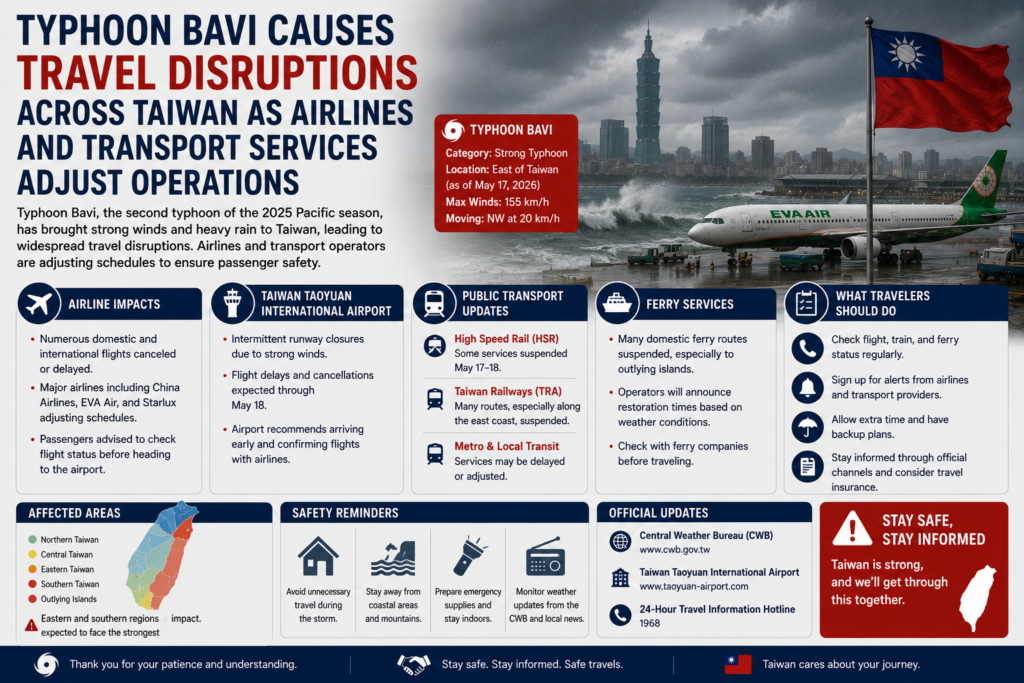
Typhoon Bavi Causes Travel Disruptions Across Taiwan as Airlines and Transport Services Adjust Operations
Taipei, Taiwan: Typhoon Bavi has disrupted travel across Taiwan, affecting flights, transportation services and daily activities as authorities respond to strong winds, heavy rainfall and hazardous weather conditions.
The storm prompted airlines and transport operators to adjust schedules, with passengers facing cancellations and delays as aviation authorities prioritized safety. The disruption highlights how severe weather events can quickly affect travel networks across East Asia, where Taiwan serves as an important regional aviation and transportation hub.
According to reports from the Taipei Times, Typhoon Bavi led to travel disruptions in Taiwan, including changes to flight operations and transportation services as the storm approached and affected the region. (taipeitimes.com)
Airlines Adjust Flight Operations
Airlines operating in Taiwan modified schedules as Typhoon Bavi affected weather conditions around the island.
Flight cancellations and delays were reported as carriers evaluated wind conditions, airport operations and passenger safety. Airlines commonly suspend or reschedule flights during severe storms because strong winds, heavy rain and reduced visibility can create risks during takeoff, landing and ground operations.
Passengers affected by weather-related disruptions were advised to check directly with airlines for the latest updates regarding departure times, rebooking options and airport procedures.
Airlines typically activate contingency plans during typhoons, including adjusting aircraft movements, changing crew schedules and providing travel flexibility where possible.
Taiwan’s Airports Monitor Storm Conditions
Taiwan’s major airports, including Taiwan Taoyuan International Airport, closely monitor weather conditions during typhoon events.
Airport operations depend on multiple factors, including wind speed, runway conditions, air traffic restrictions and safety assessments conducted by airlines and aviation authorities.
Aviation disruptions can continue even after the strongest part of a storm has passed because airlines may need additional time to reposition aircraft, restore schedules and manage passenger backlogs.
Domestic Transportation Also Affected
The impact of Typhoon Bavi extended beyond aviation.
Severe weather conditions can affect Taiwan’s rail services, ferry operations and road transportation, particularly in areas vulnerable to flooding, landslides or strong winds.
Authorities often suspend certain services temporarily when conditions become unsafe, with restoration depending on local weather assessments and infrastructure inspections.
Travelers moving between cities during typhoon conditions are encouraged to check official transportation updates before beginning their journeys.
Why Typhoons Create Aviation Challenges
Typhoons are among the most disruptive weather events for aviation because they combine several hazardous conditions.
Strong winds can affect aircraft handling, especially during takeoff and landing. Heavy rainfall can reduce visibility and create runway safety concerns. Storm systems can also produce turbulence that affects aircraft routes.
Airlines make operational decisions based on safety assessments rather than maintaining schedules at all costs.
A delayed or canceled flight during severe weather is generally considered a precautionary measure designed to protect passengers, crew members and aircraft.
Passenger Guidance During Storm Disruptions
Travelers affected by Typhoon Bavi were encouraged to take several precautions:
- Confirm flight status before traveling to the airport.
- Monitor airline notifications and official announcements.
- Allow extra time if transportation services resume.
- Keep important travel documents accessible.
- Avoid making independent arrangements before checking airline assistance options.
Passengers with connecting flights may also need to review their entire itinerary, as a delay on one segment can affect later connections.
Typhoon Preparedness in Taiwan
Taiwan experiences frequent typhoon activity because of its location in the western Pacific typhoon corridor.
Government agencies maintain established emergency procedures, including weather monitoring, public alerts and transportation adjustments.
During major storms, authorities may close schools and offices, restrict travel in high-risk areas and advise residents to remain indoors until conditions improve.
These measures are designed to reduce injuries and allow emergency services to respond effectively.
Impact on Regional Travel Networks
Taiwan plays an important role in East Asian aviation, connecting travelers between mainland China, Japan, Southeast Asia and other international destinations.
When a major storm affects Taiwan, the impact can extend beyond the island because airlines operate interconnected networks of aircraft and crews.
A cancelled flight in Taiwan can affect later services in other countries if aircraft or crew members are unable to continue scheduled operations.
This interconnected system means airlines often adjust schedules across multiple routes during major weather events.
Recovery After the Storm
Following a typhoon, airlines and transportation operators typically begin recovery operations once authorities confirm that conditions are safe.
The recovery process may involve:
- Inspecting airport facilities.
- Returning aircraft to normal schedules.
- Rebooking affected passengers.
- Clearing transportation disruptions.
- Restoring regional connections.
Passengers may experience continued delays even after weather improves because airlines need time to resolve accumulated disruptions.
The Importance of Checking Official Updates
During severe weather events, travelers should rely on official sources rather than unofficial information shared online.
Airlines, airports and government agencies provide the most accurate updates regarding cancellations, reopening schedules and travel restrictions.
Weather conditions can change quickly, making real-time information essential for anyone traveling during a typhoon.
Broader Lessons for Travelers
Typhoon Bavi demonstrates the challenges faced by travelers during extreme weather events.
While modern aviation systems are designed to operate efficiently, safety remains the priority when conditions become dangerous.
Passengers traveling during typhoon season can reduce disruption by:
- Booking flexible tickets when possible.
- Purchasing suitable travel insurance.
- Planning additional time for connections.
- Staying informed before departure.
Outlook
Typhoon Bavi’s impact on Taiwan travel services shows how quickly severe weather can affect regional transportation systems.
Although airlines and airports have procedures in place to manage storms, passengers may continue experiencing delays as operations gradually return to normal.
Travelers affected by the storm should continue monitoring airline and transportation updates while authorities assess conditions and restore regular services.
The disruption caused by Typhoon Bavi serves as another reminder that weather remains one of the most significant factors influencing modern air travel, particularly in regions regularly affected by powerful tropical storms.