
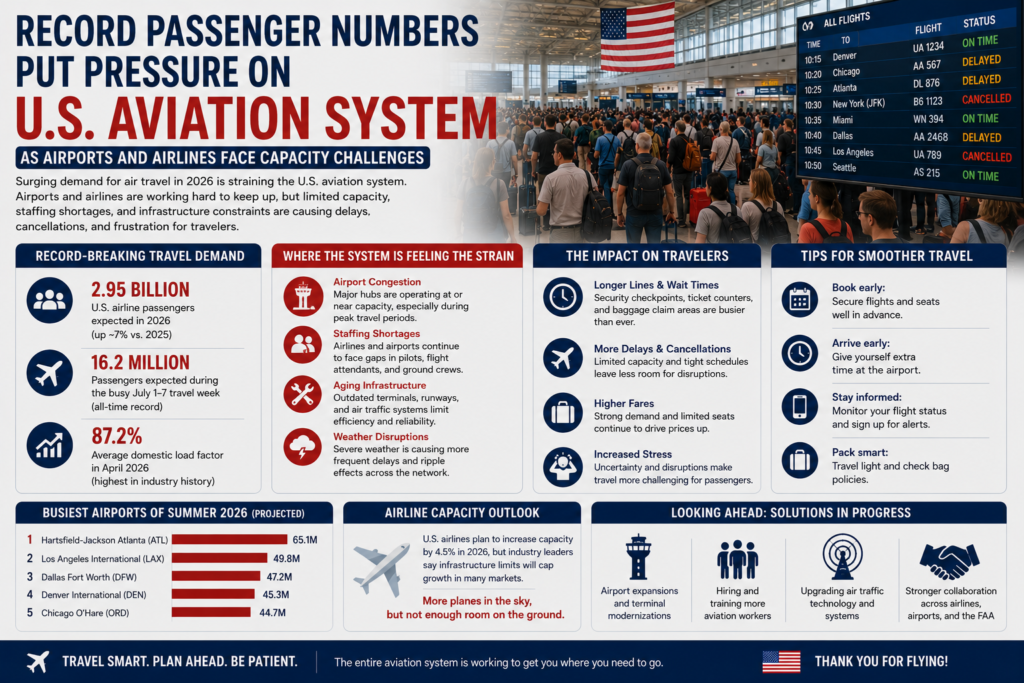
Record Passenger Numbers Put Pressure on U.S. Aviation System as Airports and Airlines Face Capacity Challenges
The U.S. aviation system is experiencing one of its busiest periods in history as record numbers of travelers fill airport terminals and aircraft cabins, creating new challenges for airlines, airports and air traffic control operations.
A surge in passenger demand has pushed airport traffic to historic levels, with more people flying than before the COVID-19 pandemic. While airlines have expanded schedules and airports have invested in improvements, the rapid growth in travel demand has placed additional pressure on infrastructure designed for earlier passenger volumes.
A recent report from NPR highlighted how crowded airports and full aircraft are testing the limits of the U.S. aviation system, as record travel numbers expose challenges involving staffing, air traffic control capacity and airport infrastructure.
U.S. Travel Demand Reaches Record Levels
The increase in air travel reflects a strong recovery that has continued beyond the pandemic-era downturn.
The Transportation Security Administration (TSA) has recorded some of the highest passenger screening volumes in its history during recent holiday and peak travel periods. Millions of passengers now pass through U.S. airport checkpoints during major travel weeks, creating significant demand for airlines and airports.
The growth has been driven largely by leisure travel, including domestic vacations, international trips and visits to family and friends.
Airlines have responded by adding flights, increasing aircraft utilization and adjusting schedules to meet demand. However, aviation infrastructure has not expanded at the same pace in every area.
Airports Face Growing Crowds
Airport terminals across the country have experienced increased congestion as passenger numbers continue rising.
Crowded check-in areas, longer security lines and busy boarding gates have become common during peak travel periods.
Large airports such as those in Atlanta, Dallas-Fort Worth, Denver, Los Angeles and Chicago regularly handle hundreds of thousands of travelers each day during busy periods.
While airports have invested in expanded terminals, additional gates and improved passenger technology, major infrastructure projects often take years to complete.
The result is that many airports are managing record demand using facilities that were designed for lower passenger volumes.
Airlines Are Operating More Flights, but Capacity Remains Limited
Airlines have increased capacity since the pandemic, but several factors continue limiting expansion.
Aircraft availability remains a major issue across the industry. Plane manufacturers have faced production delays, affecting airline fleet growth plans.
At the same time, airlines must balance passenger demand with operational costs, including fuel, labor and maintenance expenses.
Carriers have also adjusted their networks by focusing on routes with strong demand while reducing service in some lower-demand markets.
This means that even with record passenger numbers, additional flights are not always available where travelers want them most.
Air Traffic Control Challenges Add Pressure
One of the biggest concerns facing U.S. aviation is air traffic control capacity.
The Federal Aviation Administration (FAA) has reported ongoing staffing challenges among air traffic controllers. The agency has been working to hire and train additional personnel, but controller shortages can affect how many aircraft can safely operate in certain areas.
When air traffic control capacity becomes limited, airlines may experience delays, particularly during periods of severe weather or unusually high demand.
Because the U.S. aviation system is highly interconnected, delays at one airport can quickly spread across the national network.
Weather Remains a Major Source of Disruption
Even with strong airline operations, weather continues to be one of the biggest causes of travel disruption.
Summer storms, hurricanes, winter weather and periods of low visibility can affect airport operations and flight schedules.
When bad weather occurs, airlines may need to delay departures, reroute aircraft or cancel flights.
During peak travel periods, recovery can take longer because aircraft and crews may already be operating near maximum schedules.
Full Flights Create New Passenger Challenges
For travelers, record demand often means fuller aircraft cabins.
High passenger loads can affect the overall travel experience, including:
- Limited overhead bin space.
- Longer boarding times.
- Fewer available seats on alternative flights.
- Higher ticket prices during popular travel periods.
Airlines have introduced policies and technology improvements to help manage these challenges, but full flights leave less flexibility when disruptions occur.
If a flight is canceled, passengers may have fewer immediate rebooking options because other flights are also operating near capacity.
Airport Infrastructure Struggles to Keep Pace
Many U.S. airports are undergoing modernization projects aimed at handling future growth.
These projects include:
- New terminals.
- Expanded security checkpoints.
- Additional gates.
- Improved baggage systems.
- Updated passenger technology.
However, airport construction is a long-term process involving significant planning, funding and regulatory approvals.
As passenger demand grows faster than infrastructure improvements can be completed, airports must find ways to manage higher traffic levels with existing resources.
Staffing Remains a Key Industry Issue
Beyond air traffic controllers, airlines and airports continue dealing with workforce challenges.
Aviation requires highly specialized employees, including:
- Pilots.
- Mechanics.
- Flight attendants.
- Airport operations staff.
- Security personnel.
- Ground service workers.
Training many aviation positions requires significant time and investment, meaning workforce shortages cannot always be resolved quickly.
Industry officials have emphasized recruitment and training efforts as essential to maintaining reliable operations.
The Cost of a Growing Aviation System
The return of record passenger numbers represents a positive development for the airline industry, but growth also creates operational challenges.
Airlines must maintain safety standards while handling larger passenger volumes.
Airport operators must balance expansion projects with the need to keep current facilities operating efficiently.
Government agencies must manage airspace demand while improving infrastructure and staffing.
The aviation system depends on coordination between all these groups, meaning challenges in one area can affect the entire network.
Travelers Can Reduce Disruptions Through Preparation
Although passengers cannot control system-wide issues, preparation can make travel easier.
Experts recommend:
Arriving early
Crowded airports can mean longer wait times for check-in, security and boarding.
Checking flight status frequently
Schedules and gates can change, especially during busy periods.
Packing efficiently
Limited overhead space makes smaller carry-on bags easier to manage.
Planning flexibility
Travelers with important connections or events may benefit from allowing additional time.
Understanding airline policies
Knowing baggage, rebooking and cancellation rules can help passengers respond quickly during disruptions.
Technology Helps Manage Rising Demand
Airlines and airports are increasingly relying on technology to improve efficiency.
Digital tools now help passengers with:
- Mobile check-in.
- Baggage tracking.
- Flight notifications.
- Airport navigation.
- Automated customer service.
Air traffic systems are also being modernized to improve efficiency and safety.
However, technology cannot completely replace physical infrastructure, trained personnel and sufficient airspace capacity.
What the Record Travel Numbers Mean for the Future
The continued increase in passenger numbers suggests that demand for air travel remains strong.
However, the record crowds also highlight the need for long-term investment in aviation infrastructure.
The challenge for the U.S. aviation system is not simply handling more travelers today but preparing for continued growth in the years ahead.
Airports, airlines and government agencies will need to coordinate investments in facilities, technology and workforce development to prevent congestion from becoming a permanent feature of air travel.
Final Thoughts
Record passenger numbers demonstrate the strength of the U.S. travel market, but they also reveal the pressure placed on airports, airlines and aviation infrastructure.
The crowded terminals and full aircraft highlighted in NPR’s reporting reflect a broader industry challenge: demand has returned faster than some parts of the aviation system have been able to expand.
For travelers, the result is an environment where planning, patience and flexibility are increasingly important. For the industry, the challenge is ensuring that record-setting demand can be supported by a system capable of delivering safe, reliable and efficient air travel.